
Interview Questions to Ask When Hiring a Pest Control Technician
-

-
-

11 Mar, 2026
-

13 min read
-
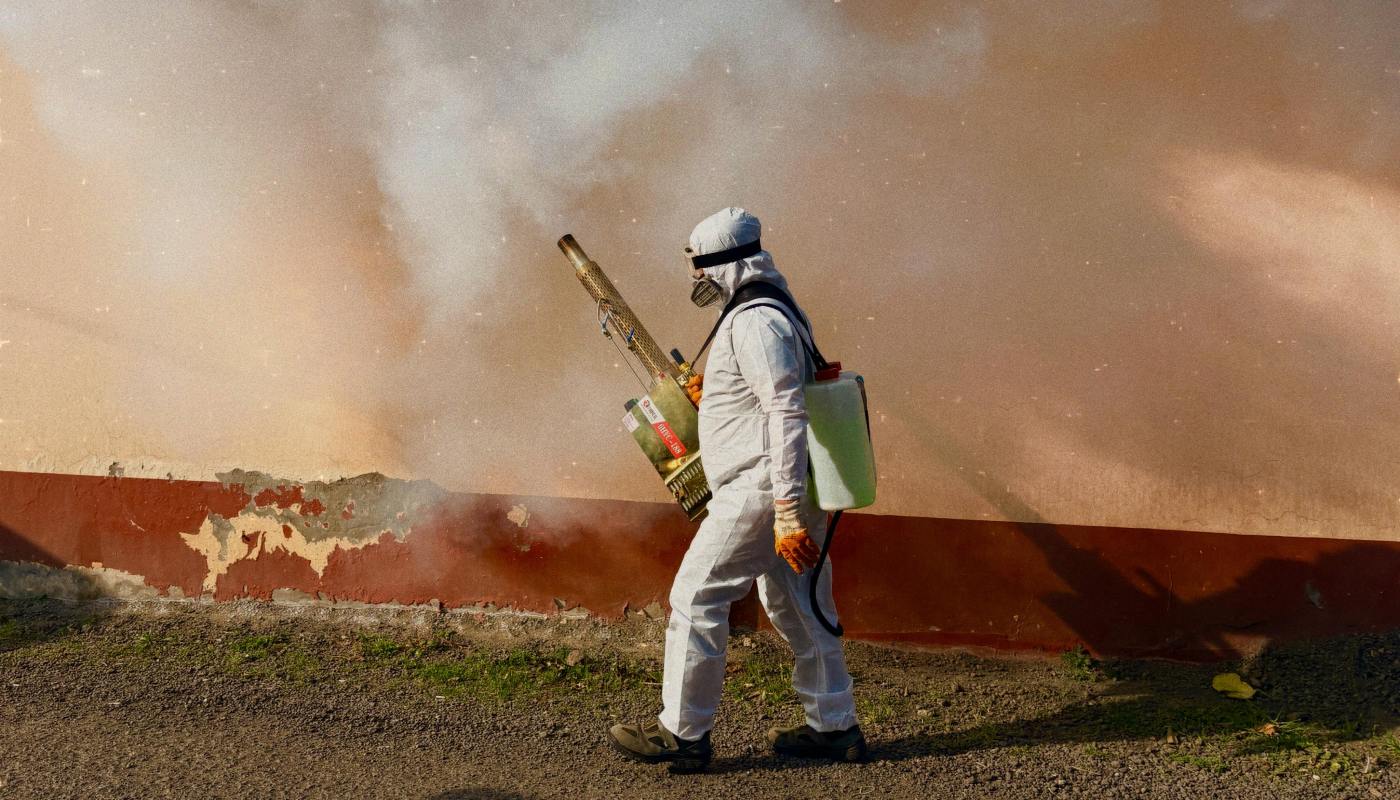
Most pest control technicians who cause problems for a business looked fine on paper. Clean driving licence, some experience, basic qualifications. Nothing to flag. Then they're out on their own and the cracks appear: jobs logged as complete that weren't done, treatments rushed through in four minutes, paperwork that doesn't stand up to scrutiny.
The interview is where you either find this out or you don't. Most standard interview question lists won't help. They're written for candidates preparing answers, not business owners trying to see past them. What follows explores the specific failure patterns that cause real damage to small pest control companies and gives you the questions most likely to reveal them before you make an offer.

1. Paperwork and compliance discipline
Pest control in the UK is a regulated activity. Every job requires a treatment record: the product used, the active ingredient, the dilution rate, the application method, the location, and the date. For rodenticide work, CRRU UK compliance adds another layer of documentation requirements. For commercial clients in food premises, the record is part of their due diligence file and may be inspected at any time.
Technicians who cut corners on paperwork tend to do it because they're rushing, because they find admin genuinely tedious, or because they don't understand why it matters. None of those are things you can train away easily once someone is out on their own route.
Ask this: Walk me through what you record at the end of a job and how you do it.
A weak answer focuses on the job itself and treats documentation as an afterthought: "I write up what I used and send it back." A stronger answer describes the record-keeping as part of the job, not separate from it: which fields they complete, what a compliant treatment record needs to include, why it matters for the client and for the business, and how they handle a situation where they've forgotten a detail before leaving site.
Also ask: Tell me about a time a client or an auditor asked you to evidence a previous treatment. What did you have, and was it enough?
This question works because it's specific and verifiable. If they've never been in that situation, that's worth knowing. If they have, the answer tells you whether they see record-keeping as protective or as a box-ticking exercise.
2. How they behave when nobody is watching
This is the single biggest risk in pest control hiring. Your technicians are on their own most of the day, at properties where the customer may or may not be present. Customer complaint records across the industry include cases of technicians sitting in vans, doing a surface-level spray that takes four minutes rather than the agreed twenty-plus, and logging it as complete. Some of the most consistent complaints about larger national pest control companies describe exactly this pattern.
You can't ask someone directly whether they cut corners. But you can ask questions that approach the same thing from different angles.
Ask this: Describe your routine when you arrive at a property where nobody is home.
A candidate who does the job properly doesn't change their process because the customer isn't there. A strong answer describes the same routine regardless: perimeter inspection first, de-webbing, treatment to the foundation, dusting in cracks and crevices, full completion of the job record, a notification left for the customer. If the answer is vague or the routine seems to depend on whether someone is watching, that's a flag worth probing.
Ask this: Has a customer ever challenged whether you actually turned up or completed a treatment? What happened?
Most technicians with several years of experience will have encountered this at least once. The question isn't designed to catch anyone out -- it's designed to see whether they're honest about difficulty and how they handled it. Someone who becomes defensive or claims it's never happened is worth questioning further.
3. Technical knowledge vs. product name-dropping
There's a well-known pattern in pest control interviews where a candidate demonstrates "knowledge" by naming products rather than understanding treatments. They'll tell you Demand CS is a good product (it is) without being able to explain why the inactive ingredients matter, what the residual means in practice given UV exposure and rainfall, or why the same active ingredient in a different formulation might produce different results on site.
Brandon Oliver, a pest control operator with experience across three major companies, made this point clearly: two products can share the same active ingredient at the same percentage and produce materially different results in the field. The inactive ingredients affect the delivery system, the residual, and the viscosity in ways that matter. A technician who doesn't understand this will default to familiar products applied in familiar ways regardless of what the job requires.
Ask this: You're treating a German cockroach infestation in a commercial kitchen. Walk me through your approach from the initial inspection.
The poor answer names a product and starts talking about where to spray it. The strong answer starts with inspection: where are they harbouring, what are the conducive conditions, what does the hygiene situation look like, does anything need to change before chemical treatment will actually work? Tom Aldridge, a pest management business owner in Australia who has interviewed hundreds of applicants, described this distinction clearly: the right answer focuses on IPM principles and getting the client on board first. Chemical method follows from that -- it doesn't replace it.
Ask this: Tell me about a job where the pest problem came back after your initial treatment. What did you do?
This question surfaces honesty and diagnostic thinking. Pest problems recur. A technician who claims this has never happened to them either hasn't been in the industry long or isn't being straight with you. A strong answer describes what investigation they did (was it a reinfestation, a treatment failure, an unresolved conducive condition?) and what they changed as a result.
4. Customer communication under pressure
Pest control is a customer-facing job. Technicians deal with people who are already stressed -- nobody calls a pest controller because things are going well. A technician who is technically competent but can't communicate clearly, or who manages customer expectations poorly, will generate callbacks, complaints, and lost contracts.
The two situations that cause the most damage are: a customer who is upset because the problem hasn't resolved, and a customer who is frightened by what the technician has found and needs clear, calm information about what happens next.
Ask this: A customer calls you back two weeks after a treatment to say they're still seeing rats. How do you handle it?
You're listening for whether they take ownership or get defensive, whether they ask questions before drawing conclusions, and whether their instinct is to protect the customer relationship or to protect themselves. A strong answer involves going back to site, carrying out a thorough inspection, and treating the callback as diagnostic information rather than as an accusation.
Ask this: Tell me about a time you had to give a customer genuinely bad news about a pest problem -- something expensive or disruptive to fix. How did you approach that conversation?
This is where character shows. Someone who inflates the severity of a problem to justify a bigger job (Orkin customer reviews include exactly this complaint, with technicians pointing to attic insulation marks as evidence of heavy mouse infestation when there were none) versus someone who gives an honest assessment and builds long-term trust. The answer won't tell you definitively which they are, but the way they talk about the customer in their answer -- whether they're describing a person they wanted to help or a transaction they needed to manage -- is usually revealing.

5. Attitude to IPM vs. spray and pray
Integrated Pest Management is the professional standard in UK pest control, and BPCA membership requires working to codes of best practice built around IPM principles. A technician who defaults to chemical application without addressing conducive conditions, entry points, or client behaviours will produce repeat infestations, generate callbacks, and eventually cost you contracts.
The practical issue is that proper IPM takes longer per job. A technician under route pressure -- or one who was trained at a volume-focused national company where speed is rewarded -- may have learned to shortcut the inspection and recommendation steps.
Ask this: What's your approach when you find a recurring infestation at a commercial site where you've treated before?
The answer should reference investigation of root causes: hygiene standards, structural access points, how goods are being stored, whether the client has followed previous recommendations. A technician who jumps straight to "I'd use a stronger bait" or "I'd increase the frequency of treatments" without addressing why the problem persists is not thinking in IPM terms.
Ask this: Have you ever told a client that what they need isn't more pest control, but a change in how they're operating? How did that go?
This is a good character question. Telling a paying client they need to change their habits rather than just book more treatments takes confidence and honesty. It also tends to be what keeps commercial accounts long-term, because clients whose problems actually get resolved don't cancel their contracts.
6. Job history red flags
Job-hopping is one of the most consistent red flags cited by pest control business owners and industry hiring guides alike. A technician who has worked at four companies in three years almost always left each of them for a reason. That reason might be entirely legitimate -- toxic management, a company that treated staff badly, a redundancy. But it might also be a pattern of conflict, unreliability, or poor performance.
The other common red flag in pest control specifically is the candidate who left a large national company and now presents their corporate training as equivalent to the judgement and autonomy required in a smaller independent operation. Working at Rentokil or Terminix involves heavily systematised routes, close supervision, and very specific company procedures. Independent technicians need to make more judgements on their own. Not everyone makes that transition well.
Ask this: Take me through your last three jobs -- why did you leave each one?
You want to hear specifics. Vague answers ("it wasn't the right fit," "I wanted to move on") that don't explain what changed are worth probing. You're also listening for how they talk about former employers: someone who has a reasonable and grounded explanation for each move is very different from someone who has a grievance about every previous company they've worked for.
Ask this: What's the most useful thing you learned at your last company, and what would you do differently here?
This question rewards self-awareness and exposes whether they can reflect honestly on their own performance. It also tells you whether they're thinking about how to apply their experience in a new context or whether they're just looking for a similar job somewhere else.

7. A practical test worth using
The BPCA's own guidance on hiring pest control technicians includes a recommendation that applies just as well to small and growing businesses as it does to larger operators: take the candidate out to a pest control vehicle and ask them to tell you what they see.
Ask them to walk you through how the vehicle should be stocked, how products should be stored and transported, where the Safety Data Sheets should be, and what they'd check before starting a route. Give them a score for each element rather than a pass/fail.
This does two useful things. First, it surfaces real knowledge that can't be rehearsed from a list of interview answers. Someone who genuinely knows safe storage of rodenticides, the requirements around product labelling, and the transport rules for professional-use pesticides will tell you in a different way from someone who has read a summary. Second, it shows you how they handle being tested practically -- whether they're confident, methodical, and honest about gaps in their knowledge, or whether they bluster through.
If you don't want to run the van exercise, a written scenario test works as an alternative. Present a scenario (a rat infestation in a food business, a bed bug report in a residential property, a German cockroach problem in a pub kitchen) and ask them to write up the approach they'd take from first visit to sign-off. What they include, what they leave out, and how they sequence the work tells you more than any answer to a standard interview question.
What good looks like overall
The technicians who work well in small and growing pest control businesses tend to share a few characteristics that don't show up in qualifications. They treat each property like it's their own problem to solve rather than a stop on a route. They can explain what they're doing and why to a customer without overcomplicating it or creating unnecessary alarm. They complete their paperwork because they understand what it's for. And when something doesn't work, they go back and find out why instead of waiting for the client to call.
None of that is guaranteed by a BPCA Level 2 or a clean licence. Both of those are necessary but not sufficient. The interview is where you test for the rest.
For businesses that are growing past two or three technicians, having a consistent process for tracking what technicians are doing in the field becomes important too. Job management software that logs treatment records against individual visits, flags when paperwork is incomplete, and gives you a full audit trail for each site means you don't have to choose between trusting your staff and having oversight. Fieldmotion's field service management tools are built for exactly this stage of growth.
FAQs
What qualifications should I require from a pest control technician in the UK?
The minimum standard most employers require is the RSPH Level 2 Award in Pest Management or the equivalent BPCA qualification. For technicians who will be applying rodenticides, CRRU UK compliance training is also expected. You can verify a technician's qualifications using the BPCA's Check a Technician tool. For commercial work in food premises, some clients will also expect evidence of ongoing CPD through the BPCA Registered scheme.
Should I hire experienced technicians or train someone from scratch?
Both approaches work, but they suit different stages of business growth. A trainee gives you someone you can shape around your standards and procedures from the beginning, but requires investment in supervision and time before they're operating independently. An experienced technician can add capacity quickly, but comes with existing habits -- some of which may not fit how you work. The interview questions in this article are particularly important when hiring experienced candidates precisely because their habits are already formed.
How much does a bad hire actually cost a pest control business?
Direct costs include recruitment, any training investment, and the salary paid during the period before you identify the problem. Indirect costs are usually larger: customers lost because a job was done poorly, callbacks that eat technician time, contracts cancelled after service failures, and the reputational damage that comes from a negative review tied to a specific technician's work. For a small pest control business, losing one commercial contract because of a technician who couldn't do the paperwork or kept generating complaint calls will typically cost far more than the time spent on a rigorous hiring process.
What's the difference between hiring for residential and commercial pest control work?
Commercial work -- particularly in food businesses, hospitality, and healthcare -- requires stronger documentation discipline, more thorough knowledge of compliance requirements (including the Food Safety Act and relevant BRC/AIB standards), and better ability to work within audited systems. It also demands a different level of client communication, since the person you're dealing with is often a facilities or operations manager with specific reporting requirements rather than a homeowner. If you're hiring for commercial accounts, test for documentation and compliance knowledge specifically and ask for examples of working within audited commercial environments.
How do I handle it if a candidate is technically strong but I have reservations about their attitude?
Attitude problems in pest control don't improve with experience, and they tend to surface at the worst possible moments -- with a difficult customer, under route pressure, or when something has gone wrong and accountability matters. Technical skills can be developed with training. A technician who is dismissive of record-keeping requirements, who talks badly about previous employers, or who can't give a straight answer about why they left their last job is a significant risk regardless of their qualifications. Trust your reservations and keep looking.
Related reading: How service agreements protect your pest control business | Managing planned maintenance schedules with Fieldmotion


