
Gas Engineer Software: What It Does, What to Look For, and Why It Matters
-

-
-

17 Apr, 2026
-

17 min read
-
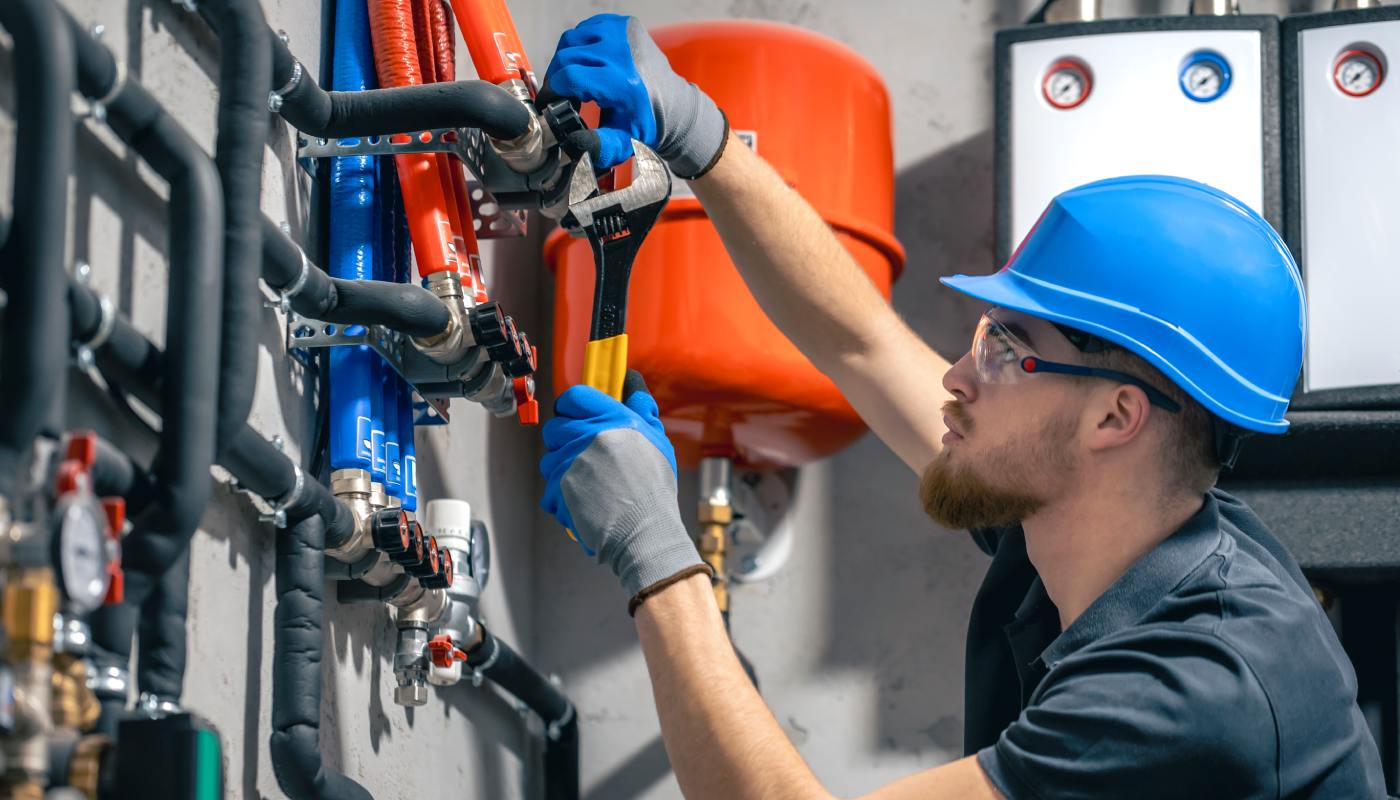
Running a gas engineering business without dedicated software is a bit like doing a boiler service with no test equipment. You can manage. Things still get done. But you know there is a better way, and you know you are paying for the gap every day in time you never get back.
Most gas engineers do not struggle to find work. Capita, which administers the Gas Safe Register, puts the number of registered engineers at around 150,000, serving over 22 million homes connected to the gas grid. The demand is persistent. The challenge is almost always everything else: the admin, the certificates, the job scheduling, the invoicing, the service reminders, the customer records. The technical work is the easy part. Running the business is where time disappears.
Our guide covers what gas engineer software actually does, what separates a useful platform from an average one, and what to think about if you are running a heating and plumbing business with a team of engineers.
What makes gas engineering admin different from other trades
Every field service business deals with job sheets, invoicing, and customer records. Gas engineers deal with all of that and several layers on top that are specific to the trade.
Legal documentation. Every gas job produces paperwork that has a legal status. Landlord Gas Safety Records (CP12s) must be issued after annual safety checks, signed by the engineer, and provided to the landlord within 28 days. Records must be kept for at least two years. Failure to produce compliant documentation carries fines of up to £6,000 per appliance under the Gas Safety (Installation and Use) Regulations 1998, as confirmed by the Health and Safety Executive. This is not optional compliance. It is a criminal liability.
Annual service cycles. A large part of gas engineering revenue comes from boiler servicing contracts and annual landlord safety checks, which repeat on a 12-month cycle. Miss a renewal reminder and you lose a job that should have been automatic. Stay on top of them consistently and they become a reliable, predictable income stream that does not depend on new customers.
Certificate variety. Beyond the CP12, gas engineers issue a range of documents depending on the job: domestic gas safety records, gas warning notices, boiler service records, boiler commissioning checklists, LPG safety records, and commercial gas safety records, among others. Each has specific fields, test results, and compliance requirements that need to be captured accurately.
Asset history. For commercial landlords and property managers who hold multiple properties, the ability to pull up a complete appliance history on a single boiler matters. When did it last get serviced? Was there a warning notice? Did a repair follow? That history is what allows an engineer to give authoritative advice on the site rather than trying to reconstruct it from memory or a paper pad.
A generic job management platform and a purpose-built system for gas engineers are different things, and gas engineers searching for software have a distinct set of requirements from, say, a window cleaning company.
The core features worth paying attention to
Not all platforms do the same things equally well. For a gas engineering business, these are the areas that matter most.
Digital certificate creation. The foundation of any gas engineer software. You should be able to fill in gas safety records, service sheets, and warning notices on your phone or tablet on site, with the customer's appliance details pre-populated from their previous records. The output should be a professional-looking PDF you can email directly from the job. The best platforms let you attach photos from your phone and sync flue gas analyser readings directly into the certificate. No double-entry, no transcription errors.
Scheduled service reminders. Boiler services are annual. CP12s are annual. The whole point of keeping a customer database is being able to contact customers before their next service is due without remembering to do it manually. A system that can send automated reminders to landlords and homeowners two to four weeks before the certificate or service anniversary, with your business name and contact details included, turns a chore into a revenue source that runs itself.
Job scheduling software. A calendar that shows where every engineer is, what they are doing, and where the gaps are. For a sole trader this is a convenience. For a team of engineers, it is a necessity. Jobs need to be allocated based on location, engineer qualifications, and parts availability. If a job comes in at 8am for an emergency call-out, the scheduler needs to show you the fastest way to fit it without breaking the rest of the day. Good job scheduling connects to the engineer's phone so they see the updated diary without a phone call.
Invoicing on completion. The fastest way to be paid is to send the invoice before you leave the job. A platform that lets you raise and send an invoice directly from the completed job record, with the certificate attached, collapses the gap between finishing the work and getting paid. For gas engineers doing multiple landlord properties in a day, this matters. An invoice that goes out at 5pm beats one that goes out on Friday evening from a pile that built up during the week.
Customer and asset records. A CRM that holds each customer's property address, appliance details, service history, and certificate archive. When a landlord rings asking when their CP12 expires, you should be able to tell them in thirty seconds rather than searching through email attachments. This is also what allows you to produce professional reports for commercial clients who need documented asset maintenance histories for compliance purposes.
Parts and stock management. This is less specific to gas engineering than the certificate features, but no less important for a heating business. Running out of a common part on a boiler service means a second visit. A platform with van stock tracking that shows what is on each van, what has been used, and what needs replenishing removes that friction. For a team of engineers, informal parts tracking stops working around the five to seven engineer mark. If you are growing, you need this in place before it becomes a problem.

What a growing gas engineering business actually needs
What a gas engineering business needs from its job management software depends heavily on how many engineers it runs and what kind of work it does. A sole trader needs speed and simplicity. A business with five or ten engineers needs something closer to a proper mobile workforce management system.
For a sole trader or small team. The priority is eliminating evening admin. If you finish your last job at 6pm and still have three hours of paperwork ahead of you, the software is failing at its main job. Look for a platform where certificates, invoices, and job notes are completed at the property, not reconstructed later at home. The time saved compounds quickly. A sole trader saving two hours per day on admin recovers around forty working days per year, time that can go into extra jobs, earlier finishes, or simply a better quality of life.
For a team of engineers. Visibility replaces speed as the main priority. The owner or office manager needs to see all jobs, all engineers, and all outstanding certificates in one place without making phone calls. Job tracking across a mobile workforce means the engineer gets the job details, the address, and the customer history on their phone, so they do not need to ring in. Completed certificates upload automatically, so the office sees them immediately. Invoicing happens against the job record, so nothing falls through the cracks between the field and the back office.
Gas engineering businesses with employed engineers also carry additional compliance obligations. Our employees vs subcontractors guide covers the CIS and employment law distinctions that affect how you structure your workforce. As the team grows, these distinctions and the payroll costs that come with them become material. The guide to calculating your true hourly rate works through what each engineer actually costs the business once National Insurance, pension, van, and training are included.
For landlord and commercial work. Compliance documentation is where the admin load gets heaviest. Commercial landlords holding multiple properties need evidence that each property's gas appliances are checked, certified, and serviced on schedule. Managing this on paper or in a spreadsheet for more than a handful of properties becomes unworkable quickly. Gas engineers software that holds all asset records against each property, generates automated renewal reminders, and archives every certificate permanently is what makes a credible commercial client base possible. Service agreements that lock in annual maintenance revenue are much easier to sell when you can demonstrate the infrastructure to manage them professionally.

The annual service cycle: where software pays for itself
The automated service reminder is where job management software pays for itself fastest in a gas engineering business.
A boiler service is typically priced between £45 and £80 depending on location and complexity, with Logic4training's 2025 survey of gas engineers putting the UK average at £62.50. A CP12 landlord safety check runs similarly. For a gas engineer with 300 customers on a recurring annual service schedule, those are 300 jobs per year that repeat automatically with no marketing spend, no lead generation, and no customer acquisition cost. But only if the reminder goes out.
Without software, engineers typically remember to chase renewals for their regular customers and miss others. Some customers ring to ask, but many do not. A few quietly move to another engineer. The result is that a real portion of recurring revenue bleeds out gradually and invisibly, never showing up as a single number but adding up over a year.
Software that tracks every customer's last service date and sends a renewal reminder on schedule recovers revenue that was already earned but quietly leaking away. For a business with 300 active service customers and an average job value of £60, a 15% improvement in renewal capture is worth £2,700 per year. For a business with 500 customers, it approaches £5,000.
Scheduling, late payments, and the cash flow problem
Gas engineering businesses face the same cash flow pressures as every other trade. Annual services and CP12 renewals arrive in clusters: autumn and winter see the heaviest demand as heating systems fail and landlords scramble to get certifications in place before tenants complain. Summer is quieter. The mismatch between when revenue arrives and when costs go out (wages, van leasing, parts) is a genuine pressure point.
Two things help. First, spread service contract revenue across the year through planned maintenance agreements that invoice monthly or quarterly rather than on completion of each visit. Second, close the gap between job completion and invoice. Our late payments article covers the mechanics in detail, but the starting point is simple: invoice the same day. Every day a completed job sits uninvoiced is a day of unnecessary cash flow drag.
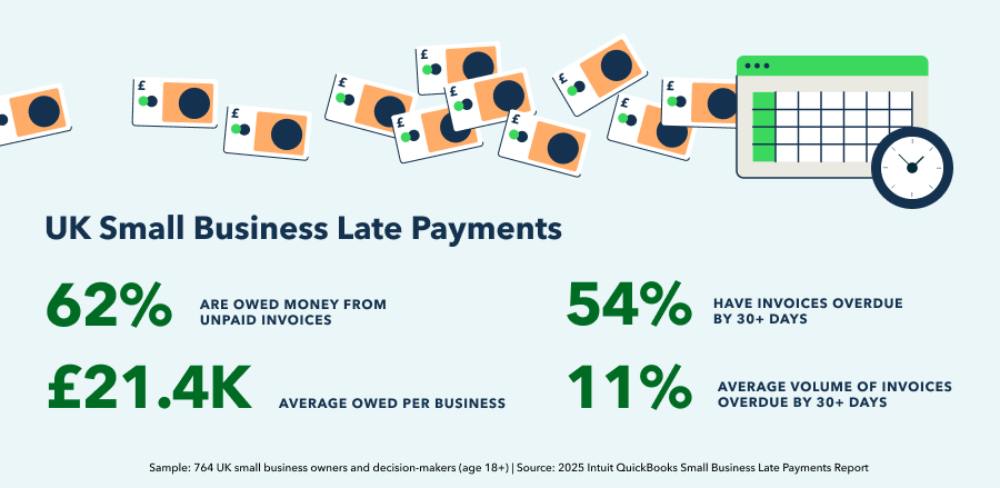
QuickBooks UK's 2025 late payments report found 62% of UK small businesses are dealing with unpaid invoices, owed on average £21,400. Construction and maintenance businesses, which covers gas engineering, are among the worst affected, with Coface's 2025 payment survey finding 95% experiencing payment delays averaging 32 days beyond terms. The government's April 2026 legislation capping payment terms and making statutory interest mandatory on late payments helps, but the practical protection is still to invoice quickly and follow up systematically.
The Warm Homes Plan and what it means for gas engineers
Gas engineering is in the middle of a structural change that has been building for years. The government's Warm Homes Plan, published in January 2026 with £15 billion in funding, targets 450,000 heat pump installations per year by 2030. The Boiler Upgrade Scheme provides £7,500 grants for air-to-water heat pump installations and £2,500 for air-to-air systems from April 2026.
For gas engineers, the picture is mixed. Boiler installations in new builds will give way to heat pump installations under the Future Homes Standard, finalised in March 2026. Gas servicing and safety work on the existing housing stock is not going anywhere. Twenty-two million homes do not get replumbed overnight. Gas Safe registered engineers are also in the best position to pick up heat pump installation work, since their existing qualifications and customer relationships carry over directly. Many heating and plumbing businesses are already running both sides in parallel: gas servicing and CP12 compliance work on one hand, heat pump and renewable installations on the other. The job management software that handles plumbing software requirements and hvac software workflows for those businesses needs to manage both service types without separate systems.
The Heat Pump Association put UK heat pump sales at 125,000 in 2025, a 27% increase on the previous year. To meet the government's 2030 target, that number needs to grow to 450,000 annually, which requires a substantial expansion of the installer workforce.
Heating and plumbing businesses making this transition need job management software that handles both sides: gas safety records and certificates for existing work, alongside the quoting, asset tracking, and job management capabilities needed for the growing heat pump and renewable energy side. Fieldmotion's renewable energy software page covers how the platform supports this kind of dual-track operation.

What separates a good gas engineer software platform from a generic one
Gas engineer software has one non-negotiable: it has to handle the gas certificates reliably, on mobile, and offline.
An engineer on site in a basement or in a rural property with poor signal cannot be waiting for a web page to load before they can complete a CP12. The certificate workflow has to work offline and sync when connectivity returns. This is not a nice-to-have. It is a practical requirement of the trade.
Beyond that, the question of whether to use a platform built specifically for gas engineers or a broader field service management platform depends on the shape of your business. Specialist gas engineer apps are optimised for the certificate workflow. A broader platform like Fieldmotion covers the full job management, scheduling, invoicing, asset tracking, and team coordination layer that a multi-engineer business needs, with mobile forms that can be configured to capture gas certificate data and planned maintenance that automates the service renewal calendar.
For a sole trader doing primarily gas safety checks and boiler services, a specialist certificate app may be all that is needed. For a heating and plumbing business with multiple engineers, commercial landlord clients, and a mix of reactive and planned maintenance work, a full job management platform typically makes more sense. The point at which the specialist app becomes limiting is usually when the business needs scheduling visibility across a team, coordinated parts management, and professional quoting. Certificate-only apps are not built for those things.
Choosing the right software: questions worth asking
Before committing to any platform, a few questions cut through most of the sales noise.
Does it work offline? For gas engineers, this is non-negotiable. Test it, do not take the answer on trust.
Can it generate all the certificates you need? Domestic and commercial CP12s, gas warning notices, boiler service records, LPG records if relevant. Make sure the specific documents your work requires are all covered before signing up.
How does the service reminder system work? Who sends the reminder: you manually, or the system automatically? What does the customer receive? Can you customise the timing and the content? The answers to these questions determine how much recurring revenue either gets captured or quietly lost.
What does the customer database look like? Can you hold multiple properties per landlord? Can you see the full service history of a specific boiler with one click? Can you pull a report of all certificates due for renewal in the next 30 days?
How does it handle team scheduling? If you currently have two or three engineers and plan to grow, does the platform scale with you? Adding engineers should be simple, not a reason to switch platforms. Our guide on growing from 5 to 15 engineers covers the operational changes that come with team growth in more detail.
What does invoicing look like from the field? Can an engineer send an invoice before they leave the job? Does it attach the certificate automatically? Does it connect to Xero or QuickBooks?
If you want to see how Fieldmotion handles these requirements for a heating and plumbing business, book a free demo.
Related reading:
-
How to calculate your true hourly rate — what a gas engineer actually costs the business per billable hour
-
Service agreements in field service — how to structure recurring maintenance contracts
-
Employees vs subcontractors in field service — CIS obligations and workforce structure
-
Late payments in field service — how to reduce the cash flow gap between completing work and getting paid
-
How to get more HVAC clients — lead generation for heating businesses
-
Van stock and parts management — managing parts across a fleet of engineer vans
-
Heating, Ventilation and Air Conditioning software — how Fieldmotion supports the HVAC industry
FAQs
Do gas engineers need specialist software or will a generic job management app do?
It depends on the size and shape of the business. A sole trader doing mainly boiler services and CP12 landlord safety checks may find a specialist gas certificate app covers most of what they need. For a heating and plumbing business with multiple engineers, a mix of reactive and planned maintenance work, and commercial landlord clients, a broader job management platform that handles scheduling, team coordination, invoicing, asset records, and mobile forms tends to make more sense. The specialist apps are optimised for the certificate workflow but are not built for team scheduling, van stock management, or professional quoting. Most growing businesses hit those limits between three and five engineers.
What is a CP12 and how does job management software help with it?
A CP12, also known as a Landlord Gas Safety Record or Gas Safety Certificate, is a legal document that must be issued by a Gas Safe registered engineer after completing an annual safety check on gas appliances in a rental property. Under the Gas Safety (Installation and Use) Regulations 1998, landlords must arrange this check every 12 months and provide the certificate to tenants within 28 days. Records must be kept for at least two years. Failure to comply carries fines of up to £6,000 per appliance. Job management software helps by letting engineers complete the certificate digitally on site rather than on paper, attaching it to the job record, sending it to the landlord automatically, and tracking when each property is due for renewal. The automated renewal reminder is particularly valuable for gas engineers managing a large number of landlord properties.
How do boiler service reminders work in job management software?
Most job management platforms store each customer's last service date and can send automated reminders when the annual anniversary is approaching. A good system lets you set how far in advance the reminder goes out (typically two to four weeks), customise the message with your business name and contact details, and choose whether it goes by email, SMS, or both. The reminder lands in the customer's inbox or phone without you having to remember to send it manually. For a gas engineer with several hundred annual service customers, this automation is the single biggest source of recovered revenue in the business. Without it, a portion of renewals slip through each year as customers forget to book or drift to another engineer.
Does gas engineer software need to work offline?
Yes. Gas engineers frequently work in locations with poor or no mobile signal, including basements, plant rooms, and rural properties. The certificate workflow needs to function without an internet connection and sync automatically when connectivity returns. This applies to filling in CP12 forms, capturing appliance readings, attaching photos, and collecting customer signatures. Any platform that requires a live connection to complete certificates is a practical problem in this trade. It is worth testing offline functionality directly rather than taking a sales claim at face value.
What is happening with gas boilers and the Warm Homes Plan?
The UK government's Warm Homes Plan, published in January 2026, commits £15 billion to upgrading 5 million homes by 2030 with a focus on heat pump installations. The Boiler Upgrade Scheme provides grants of £7,500 for air-to-water heat pumps and £2,500 for air-to-air systems. The Future Homes Standard, finalised in March 2026, mandates heat pumps as the default heating system in new builds. Gas boilers are not being banned in existing properties, but new gas boiler installations in new builds will end under the standard. Over 22 million UK homes are currently connected to the gas grid, meaning demand for gas servicing, maintenance, and safety certification will remain for many years. Gas Safe registered engineers are also well positioned to move into heat pump installation, with significant overlap between existing qualifications and the new demand. UK heat pump sales hit 125,000 in 2025, a 27% increase on the previous year, according to the Heat Pump Association.
How can a gas engineering business reduce late payments?
The most effective change is invoicing on completion rather than at the end of the week or month. Job management software that lets an engineer raise and send an invoice directly from the completed job record, before leaving the property, cuts the time between finishing work and getting paid to hours rather than days. For landlords with multiple properties, service agreements that invoice monthly or quarterly smooth cash flow across the year and reduce the administrative overhead of managing individual job invoices. QuickBooks UK's 2025 late payments report found 62% of UK small businesses dealing with unpaid invoices averaging £21,400 owed. New government legislation from April 2026 caps payment terms at 60 days for large companies paying smaller suppliers and makes statutory interest mandatory on late payments, which gives gas engineering businesses a stronger basis for enforcing their terms.


