
Heat Pump Grants Just Got Bigger: A 2026 Guide for UK and Ireland Installers
-
-

05 Aug, 2026
-

9 min read
-
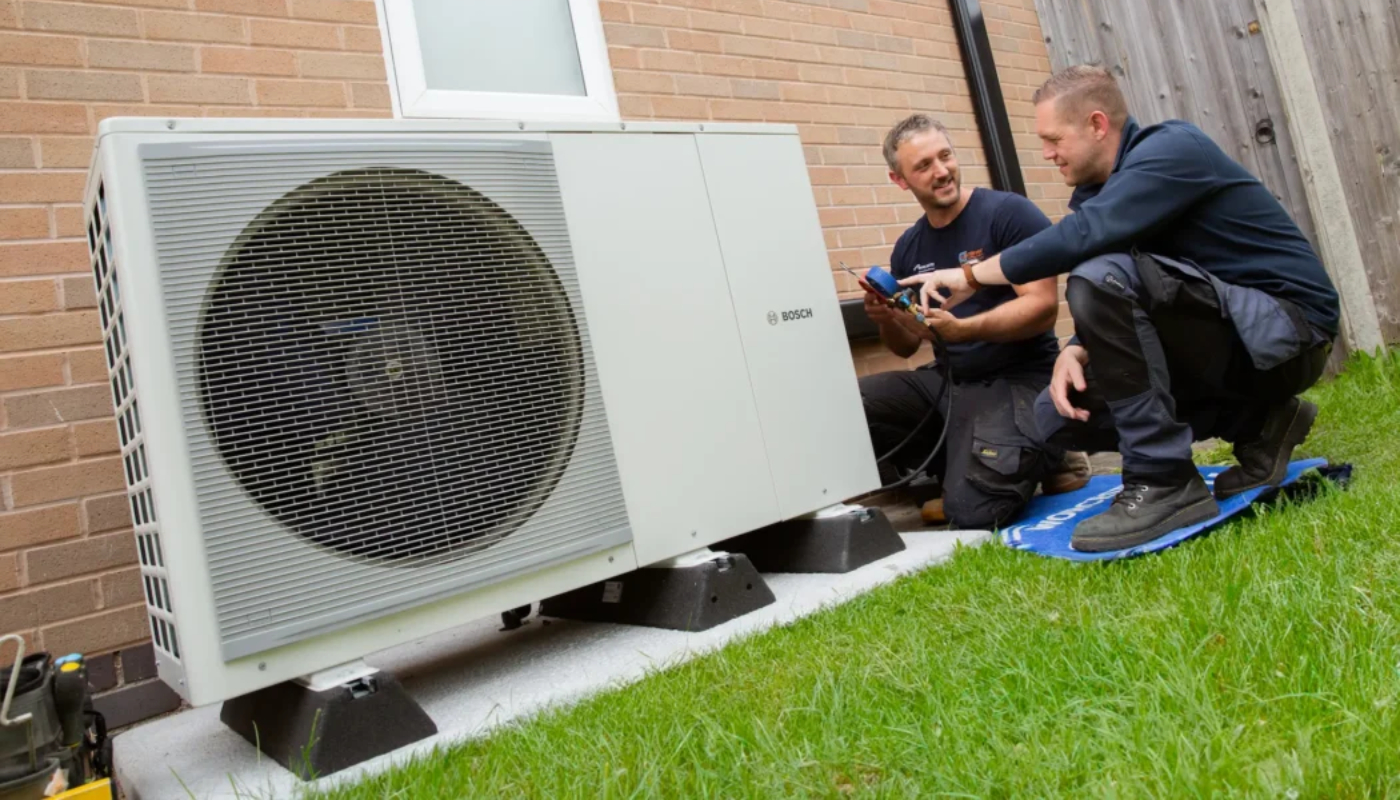
Heat pump grants have become one of the biggest demand drivers a heating or renewables installer can tap into, and 2026 has brought a run of changes that make them bigger and more generous than ever. A £9,000 grant landed for some homes in England and Wales in July. The Republic of Ireland nearly doubled its grant back in February. Applications are surging. For an installer, this is not abstract policy. It is customers with a large chunk of their bill covered by the state, ready to spend, and choosing whoever can actually do the work.
There is a catch that trips people up, though, and it is the same one that runs through so much of this business: what is on offer depends entirely on which side of which border the property sits. An installer in Dublin, one in Belfast, and one in Cardiff are working with four completely different schemes, and getting them mixed up loses you jobs and credibility. This guide sets out what each jurisdiction offers in 2026, what changed, and what it means for the work coming your way.
England and Wales: the Boiler Upgrade Scheme, now up to £9,000
The Boiler Upgrade Scheme, or BUS, is the main grant in England and Wales, and it had a busy 2026. The core offer is £7,500 off an air-to-water or ground-source heat pump, and £5,000 off a biomass boiler.
Two changes matter this year. In April, a new version of the guidance came in that removed the old requirement for a valid Energy Performance Certificate, added air-to-air heat pumps to the scheme at £2,500, and extended the whole thing out to 2030, which gives real planning runway. Then, from 21 July 2026, a temporary uplift took the grant to £9,000 for off-gas-grid homes currently heated by oil or LPG, an extra £1,500 that runs until 31 March 2027. Homes on mains gas or electric heating stay at £7,500.
The mechanics matter for how you work. BUS is installer-led: the customer does not apply, you do, through Ofgem, and the grant comes off your quote as an upfront discount rather than landing with the customer later. To do that you must be MCS-certified for the technology and a member of an approved consumer code. No MCS, no BUS, and therefore no access to a large and growing pool of grant-backed work.
The Republic of Ireland: SEAI, now up to €12,500
South of the border, the Sustainable Energy Authority of Ireland runs the grant, and it made the single biggest move of any jurisdiction this year. From 3 February 2026, the heat pump grant for houses jumped to a maximum of €12,500, up from €6,500, close to double, with apartments eligible for up to €9,500. It comes as a bundle covering the heat pump system plus supporting upgrades, and the increase applied even to applications that were already open.
The effect on demand has been dramatic. Heat pump applications to SEAI rose by around 95% in the first quarter of 2026 compared with the year before, driven by the government's target of 400,000 home heat pumps by 2030. For most standard houses, the grant now covers a very large share of the total cost, which changes the conversation with a customer entirely.
The route is different from the BUS, though, so do not assume the English model. In the Republic the homeowner applies through SEAI, and approval has to be in place before any work starts. To carry out grant-supported work you need to be an SEAI-registered contractor, registered as both a works contractor and a renewable energy installer. If you work in the Republic and you are not on that register, you are locked out of a market that is growing fast.
Northern Ireland: the honest gap
This is where installers get caught out, because the assumption is that Northern Ireland works like the rest of the UK. It does not. The Boiler Upgrade Scheme does not operate in Northern Ireland at all, and no installer there can redeem a BUS voucher. The older Boiler Replacement Scheme has closed, and there is currently no like-for-like capital grant that hands a homeowner several thousand pounds off a heat pump the way BUS or SEAI does.
What exists instead is largely income-based. The Affordable Warmth Scheme, delivered through the Housing Executive, offers up to £7,500 of heating and insulation work for lower-income owner-occupiers, and NISEP, the Northern Ireland Sustainable Energy Programme, is the other main route. Dedicated heat pump funding has been described as in development, so the picture may change, but as things stand, an NI installer cannot lean on the same generous, universal grant their counterparts across the water and across the border can.
That is worth being straight with customers about, because a Northern Irish homeowner who has read about the £7,500 or £9,000 English grant will often assume it applies to them. Being the installer who explains the actual position clearly, rather than the one who lets them down later, builds the kind of trust that wins referrals. For the wider funding an NI or Irish field service business can tap into beyond heat pumps, our guide to business grants across Ireland and Northern Ireland covers the schemes that do apply.
Scotland, in brief
For completeness, Scotland runs its own scheme through Home Energy Scotland, offering a grant of up to £7,500 with a further £1,500 uplift for rural and island properties, alongside an optional interest-free loan. As in the Republic, it is homeowner-applied with approval needed before work begins, rather than installer-led like the BUS. If your work extends into Scotland, that is a third set of rules again.
What this means for your business
Step back from the detail and the picture for an installer is genuinely positive. Across most of these islands, the state is now covering a large share of the cost of the exact work you do, and demand is climbing accordingly. The businesses that benefit are the ones positioned to capture it, and that comes down to a few things.
Certification is the gateway, and it is not optional. In England and Wales, MCS certification is the hard requirement for BUS work; in the Republic, SEAI registration is the equivalent. If you are serious about heat pump work and you are not certified, that is the single investment that opens up the grant-backed market, and with schemes now extended to 2030 there is a clear runway to justify it. Our guide to breaking into commercial and accredited work covers the wider set of credentials buyers increasingly expect.
The documentation load is real, and it rewards being organised. MCS and SEAI both require that installs are properly recorded, that certificates are retrievable, and that your processes stand up to audit. Doing that on paper, across a growing book of grant-backed jobs each with its own paperwork trail, is where it starts to hurt. When each job carries its own records and certificates automatically, through proper job records and mobile forms, staying audit-ready becomes part of doing the work rather than a separate burden that grows with your volume.
The demand is also a chance to broaden what you offer. For a heating or plumbing business watching the gas-boiler market face a long, slow decline, grant-backed heat pump work is one of the clearest routes to diversifying your revenue into something with real momentum behind it. The grants are, in effect, the government funding your customers to give you that work.
The bottom line
2026 has made heat pump grants materially bigger across most of the UK and Ireland: £9,000 for some homes in England and Wales, up to €12,500 in the Republic, with Scotland offering its own route and Northern Ireland, honestly, still waiting for a comparable scheme. For an installer, that is a large and growing pool of grant-backed work, gated mainly by certification and the ability to keep clean, auditable records.
Know exactly which scheme applies where you work, get and keep the certification that gives you access to it, and set your business up to handle the documentation without drowning in it. Do that, and the wave of grant-driven demand becomes yours to catch rather than something your better-organised competitors take instead.
This article is general guidance, not financial or regulatory advice, and grant schemes change frequently. For current details and eligibility, refer to the official sources for each jurisdiction: GOV.UK and Ofgem for the Boiler Upgrade Scheme, SEAI in the Republic of Ireland, Home Energy Scotland, and the Housing Executive in Northern Ireland, or check the current MCS requirements before relying on a specific figure.
FAQs
How much is the heat pump grant in 2026?
It depends on where the property is. In England and Wales, the Boiler Upgrade Scheme gives £7,500 for an air-to-water or ground-source heat pump, £2,500 for air-to-air, and £5,000 for biomass, rising to £9,000 for off-gas-grid oil or LPG homes from 21 July 2026 until 31 March 2027. In the Republic of Ireland, the SEAI grant increased to a maximum of €12,500 for houses on 3 February 2026. Scotland offers up to £7,500 through Home Energy Scotland, plus a £1,500 rural uplift. Northern Ireland has no equivalent universal capital grant.
Does the Boiler Upgrade Scheme apply in Northern Ireland or Scotland?
No. The Boiler Upgrade Scheme covers England and Wales only. Northern Ireland is not part of the scheme and has no like-for-like heat pump capital grant at present; its main routes are the income-based Affordable Warmth Scheme and NISEP. Scotland runs its own separate scheme through Home Energy Scotland. Installers working across these areas need to know which scheme applies where, as the amounts, eligibility, and application routes differ significantly.
Do I need to be MCS-certified to install heat pumps under the grant schemes?
For the Boiler Upgrade Scheme in England and Wales, yes. Both the installer and the equipment must be MCS-certified, and the installer must also be a member of an approved consumer code. Because the grant is installer-led, you apply through Ofgem and deduct it from the customer's quote. In the Republic of Ireland the equivalent requirement is SEAI registration, as both a works contractor and a renewable energy installer. Without the relevant certification, you cannot access grant-backed work in either market.
How has heat pump grant demand changed in 2026?
Sharply upward, particularly in the Republic of Ireland, where heat pump applications to SEAI rose by around 95% in the first quarter of 2026 compared with the previous year, following the grant increase to €12,500. In England and Wales, the extension of the Boiler Upgrade Scheme to 2030 and the £9,000 uplift for off-gas-grid homes have strengthened the pipeline further. For installers, this represents a large and growing pool of work where the state covers much of the customer's cost.
Is the £9,000 Boiler Upgrade Scheme grant permanent?
No. The £9,000 figure is a temporary uplift that applies only to off-gas-grid homes currently heated by oil or LPG in England and Wales, and it runs from 21 July 2026 to 31 March 2027. Homes on mains gas or electric heating remain at the standard £7,500. After the uplift period ends, the grant is expected to return to the standard levels unless the government announces otherwise, so factor the deadline into how you plan and quote off-gas-grid work.


Aaron Smith
Aaron is a Business Consultant at Fieldmotion, helping field service companies work smarter, not harder. He partners with businesses of all sizes to understand their challenges and deliver job management solutions that streamline workflows, boost efficiency, and support growth. With a background in Business Management, Aaron focuses on achieving measurable results for every client.

