
The Electrician’s Guide to Minor Works Certificates
-

-
-

11 May, 2026
-

13 min read
-
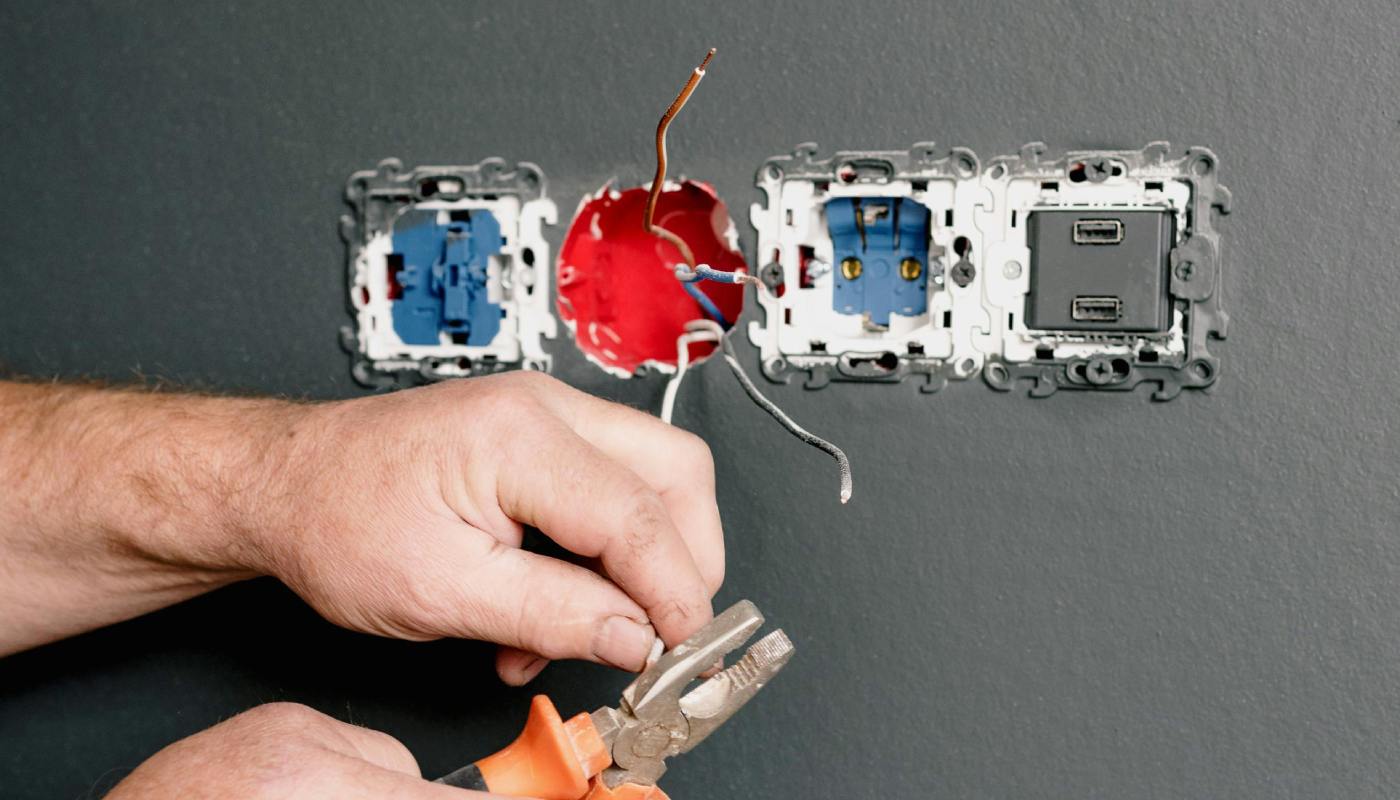
Electrical contractors deal with Minor Works Certificates all the time. Add a socket to an existing circuit, extend a lighting run, fit a fused spur for a boiler — the job might only take an hour or two, but the paperwork still matters. In most cases, that means issuing a Minor Electrical Installation Works Certificate (MEIWC), usually shortened to just “Minor Works Certificate.”
It’s one of the most commonly used certificates in domestic electrical work, but also one that causes plenty of confusion. Electricians regularly end up using the wrong form, missing test results, combining multiple circuits onto one certificate, or leaving sections incomplete. Small paperwork mistakes can turn into much bigger problems later, especially once your signature is attached to the job.
Let's break down what a Minor Works Certificate is actually for, when you should use one, what each section needs, the mistakes that catch electricians out, and what Amendment 4 changes from October 2026 onwards.
Table of Contents:
- What is a Minor Works Certificate?
- Minor Works vs EIC vs EICR: what’s the difference?
- Part P and notifiable vs non-notifiable work
- The five parts of a Minor Works Certificate
- Common mistakes and what they cost you
- What Amendment 4 changes for Minor Works Certificates
- Why proper Minor Works documentation matters beyond compliance
- Managing Minor Works Certificates at scale
What is a Minor Works Certificate?
A Minor Electrical Installation Works Certificate is defined in Appendix 6 of BS 7671 — the IET Wiring Regulations. It confirms that small additions or alterations to an existing circuit have been designed, installed, inspected, and tested in line with BS 7671, without requiring a full Electrical Installation Certificate.
As Logic4training describes it: "It records what was changed, which circuit was affected, and the test results that show the work has not impaired the safety of the existing installation."
The key words are existing circuit. A Minor Works Certificate is for additions and alterations to circuits that are already there. It is not for new circuits. That distinction determines which certificate you issue. Getting it wrong creates real problems.
What a Minor Works Certificate covers:
- Adding socket outlets or lighting points to an existing circuit
- Relocating a light switch
- Extending a lighting circuit to add a new light point
- Fitting a fused connection unit on an existing radial
- Replacing accessories or luminaires (but not distribution boards)
What requires a full EIC instead:
- Installing a new circuit
- Replacing or upgrading a consumer unit
- Full or partial rewiring
- Any major alteration that goes beyond modifying an existing circuit
The rule of thumb that works in practice: small changes on existing circuits = Minor Works. New circuits or board changes = EIC. If you're inspecting an existing installation without doing any new work, that's an EICR.

Minor Works vs EIC vs EICR: what's the difference?
These three documents trip people up, and it's worth having a clear picture of all three before getting into the detail of the Minor Works Certificate itself.
Minor Works Certificate (MEIWC): Single page. Single signatory. Covers additions and alterations to one existing circuit. Includes test results for that circuit only. Issued when the work is complete.
Electrical Installation Certificate (EIC): Multi-page. Three signatories covering design, installation, and inspection/testing (often the same person on domestic jobs). Required for new circuits, consumer unit changes, and major alterations. Accompanied by a Schedule of Test Results and Schedule of Inspections. As Total Skills UK explains, it's "required whenever new circuits are installed, an installation has been materially altered, or an addition is made to an existing installation that goes beyond the scope of a Minor Works Certificate."
Electrical Installation Condition Report (EICR): Not a certificate for new work. A periodic inspection report on the condition of an existing installation. Different document, different purpose, different trigger — it's the electrical equivalent of an MOT. Can produce an unsatisfactory result. An EIC or Minor Works Certificate never can.
A Minor Works Certificate only covers the specific work done on the specific circuit worked on. It does not assess or certify the condition of the wider installation. A client who receives a Minor Works Certificate for a new socket should not assume their entire electrical installation has been checked.
Part P and notifiable vs non-notifiable work
For domestic work in England, Part P of the Building Regulations governs which electrical work requires notification to Building Control and which doesn't. Understanding this matters because it determines what paperwork accompanies the technical certificate.
Non-notifiable work — additions and alterations to existing circuits outside special locations — does not require Building Control notification. Minor Works in a living room, bedroom, or hallway falls into this category. You still need to issue the Minor Works Certificate, and the work must still comply fully with BS 7671, but you don't need to involve Building Control or a competent person scheme to register the job.
Notifiable work — any new circuit, consumer unit replacement, or work in special locations (bathrooms, kitchens, outdoors) — must either be carried out by a member of a competent person scheme (NICEIC, NAPIT, ELECSA, BESCA, Stroma, or Blue Flame Certification) or notified to the Local Authority Building Control before work starts.
The IET's Part P guidance and Planning Portal both cover this clearly. Key point from MJ Electrical Training's Part P guide: "non-notifiable does not mean unregulated. Even though non-notifiable work does not need to be reported to Building Control, it must still comply fully with the current edition of BS 7671."
Part P applies in England only. Wales, Scotland, and Northern Ireland have their own building regulations. The principles of electrical certification (EIC, MEIWC, EICR) apply across the UK, but the notification requirements vary.

The five parts of a Minor Works Certificate
When you look at a Minor Works Certificate for the first time, it can appear busy for what's supposed to be a simple document. Each section is there for a reason. Here's what goes in each one.
1: Description of the minor works
This covers who ordered the work, where it was done, what was done, and whether there are any departures from BS 7671.
Client details and date. The name of the person who ordered the work, and the date it was completed. Worth writing the full year — writing "20" rather than "2020" leaves a date that can be altered later.
Installation address. The address where the work was carried out. Not the address you trade from. The job address.
Description of the minor works. A brief, accurate description of what was done. "Installation of a new outdoor light off an existing circuit" is the right level of detail. Vague descriptions create problems when future electricians or insurers need to understand what was changed and when.
Departures from BS 7671. If there are none, write NA across this line. Don't just leave it blank. An NA through the box also covers the risk assessment attachment field. Leaving lines blank invites amendment after you've left the property.
Comments on existing installation. Record anything you observed on the existing installation that isn't a direct result of your work — an untidy consumer unit, a legacy wiring issue, anything worth flagging to the customer. These are observations, not problems your work created.
2: Presence and adequacy of installation earthing and bonding arrangements
This section identifies the earthing arrangement and records the adequacy of the main protective conductors.
System earthing arrangement. Identify whether it's TNS, TN-C-S (PME), or TT. You determine this by examining the supply. A TNS arrangement has the earthing conductor taken off the sheathing of the supply cable. The reading for the ZDB — the earth fault loop impedance at the distribution board, measured with parallel earths in place — is recorded here.
One useful approach beyond what the form strictly requires: if you test the supplementary bonding conductors for water and gas, record the actual readings alongside the tick boxes even though there's no dedicated field for them. Gas 0.02 ohms, water 0.03 ohms. Write it down. The next electrician who comes to the property (or the inspector who reviews your certificate) can see exactly what the values were at the time of the work, and spot any high readings that might indicate a problem has developed. It's a small thing, but it's the kind of detail that separates thorough paperwork from a form that just covers the minimum.
NA through any boxes that don't apply.
3: Circuit details
This covers the specific circuit that was worked on.
DB reference and location. Identify the distribution board and its location (under the stairs, entrance hall, garage). If a property has multiple boards, label them — DB1, DB2 — so any future work can be located clearly.
Circuit number and description. The circuit number as it sits in the consumer unit, counting from the main switch outward. The description — "downstairs lighting circuit," "kitchen ring final" — tells anyone reading it which circuit was affected.
Overcurrent protective device details. The BS EN standard (60898 for a standard MCB), the type (B, C, D), and the rating in amps. This tells anyone reviewing the certificate what protection the circuit has and what maximum earth fault loop impedance is permissible.
Conductor sizes. Line and neutral conductor cross-sectional area, and the circuit protective conductor (CPC) size.
4: Test results for the circuit altered or extended
Here's where the testing data goes. You transfer the readings you've taken (whether from a scrap of paper during the job or from a digital meter) onto the certificate itself.
Protective conductor continuity. If you've carried out test method one (R1+R2), record that value. If test method two (R2 only) isn't applicable to the circuit, write NA through that line. Don't leave blank lines.
Ring final circuit conductors. Only applicable to ring final circuits. If you've done an installation on a lighting circuit, a separate Minor Works Certificate for any socket work on a ring circuit — these cannot be combined on the same form. One certificate per circuit.
Insulation resistance. Two values: between live conductors (line and neutral), and between live conductors and earth. Where conditions on site mean the first test can't practically be carried out — LED downlighters on a lighting circuit, for instance, where disconnecting every fitting to link line and neutral would be impractical — record a limitation (LIN) rather than leaving it blank. The second value (live conductors to earth) can still be tested in most cases.
Polarity. Confirmed by testing. Tick if satisfactory.
Maximum earth fault loop impedance. Your measured Zs value for the circuit, and the maximum permissible for the protective device. The on-site guide gives these at 80% of the BS 7671 maximum — ready to use without further calculation. If you use the values from BS 7671 directly, you need to calculate 80% yourself. Record both your measured value and the maximum. Some electricians annotate the certificate to show both where the form doesn't have a dedicated field — if you record your measured Zs as 2.25 ohms and the maximum for the device is 5.82 ohms, write both down so the relationship is clear.
RCD operation. Where an RCD is present, record the I∆n value (typically 30mA), and the disconnection time at the appropriate multiple. For a circuit where the RCD provides additional protection, record the 5× test time. For fault protection only, record the 1× time. If you record both, that's fine — covering yourself by putting all readings down is never the wrong call.
5: Declaration
The declaration certifies that the work has been designed, constructed, inspected, and tested in accordance with BS 7671. It includes the amended-to date: currently this would reference Amendment 4 (2026) for any work carried out under the new Orange Book from April 2026 onwards.
The electrician signs, prints their name, states their position (electrician, domestic installer, etc.), and gives the address they trade from. The client gets the original. You keep the duplicate.
This is the part that carries legal weight. A signature on a Minor Works Certificate is not an administrative formality.
Common mistakes and what they cost you
Wrong certificate for the job
If you install a new circuit and issue a Minor Works Certificate, the paperwork is wrong. Any work done from that point is effectively unverified by the correct document. If a fault develops and it traces back to the circuit in question, your certificate may not protect you.
The test: does the work create a new circuit, or does it add to an existing one? If it's a new circuit, it's an EIC.
One certificate across multiple circuits
Each Minor Works Certificate covers one circuit. If you add sockets to two different circuits in the same property in the same visit, you issue two certificates. Using one certificate to cover both is not acceptable.
Incomplete test results and blank lines
Every test that applies to your circuit must have a recorded value. Every field that doesn't apply should have NA written through it. Not left blank. Blank lines can be filled in after the fact. A properly completed form with NA in every inapplicable field cannot be silently amended.
Missing maximum Zs
Recording your measured Zs without recording the maximum permissible value for the protective device means the certificate doesn't demonstrate compliance. Someone reviewing it later can't tell whether your measured value was within limits.
Issuing without testing
A Minor Works Certificate certifies that work has been inspected and tested. Signing one without carrying out proper testing is more than a paperwork problem. If something goes wrong, you've signed a document certifying compliance that you cannot substantiate.
Using out-of-date forms
From October 2026, the model forms in the Orange Book (BS 7671:2018+A4:2026) replace those in the Brown Book. The changes to how observations and FI codes are recorded affect Minor Works Certificates as well as EICRs. New work carried out after 15 October 2026 should use the updated Appendix 6 forms.

What Amendment 4 changes for Minor Works Certificates
Amendment 4 to BS 7671 was published on 15 April 2026 and becomes mandatory for all new work from 15 October 2026. The Electrical News Weekly captures the shift well: "FI codes are no longer a fallback and must be justified with clear identification of danger. Amendment 4 reinforces a shift toward greater responsibility, requiring electricians to base decisions on risk, understand system behaviour, and clearly justify their work."
For Minor Works Certificates specifically, the updated Appendix 6 forms reflect the revised observation and coding framework introduced in Amendment 4. The treatment of departures from BS 7671 in Part 1 becomes more structured, and any observations on the existing installation carry clearer implications for how they're recorded and communicated.
Electricians who have been working to Amendment 3 forms should obtain the Orange Book and familiarise themselves with the updated model forms before October. The Brown Book is valid in parallel until 15 October 2026, after which all new work must be carried out and certified to Amendment 4.
Why proper Minor Works documentation matters beyond compliance
A Minor Works Certificate is evidence. It's what a solicitor requests when a property is sold. It's what an insurer looks at when a claim involves work done on a circuit. It's what the next electrician relies on to understand what was changed and when.
As Logic4training puts it: "Future electricians rely on historic certificates, including Minor Works, to understand how circuits have been adapted over time, what protective devices are in place, and what test values were obtained at the time of the change."
Properties with a clear documentation trail sell more smoothly. Landlords with proper certification records are better protected. Electricians whose paperwork stands up to scrutiny build the kind of reputation that generates referrals.
Managing Minor Works Certificates at scale
For electrical contractors producing Minor Works Certificates across multiple jobs and multiple engineers, the administrative overhead of paper-based certification grows fast. Paper certificates get lost in vans, damaged on site, and filed in ways that make them hard to retrieve when a client queries work done two years ago.
Digital job management platforms allow engineers to complete certificates on site, attach them to the client record, and send copies from the job without returning to the office. Fieldmotion's mobile forms are designed exactly for this workflow — complete on site, stored against the job, accessible when needed.
For businesses managing planned maintenance contracts alongside reactive callout work, a system that links certificate storage to asset records and client history also supports compliance reporting and renewal tracking. The electrical contractor compliance article covers the broader regulatory context — including the EAS qualification changes from October 2026 that affect who can carry out the inspection and testing underpinning Minor Works Certificates.


