
Risk Assessments in Pest Control: What Business Owners Actually Need to Know
-

-
-

22 May, 2026
-

13 min read
-
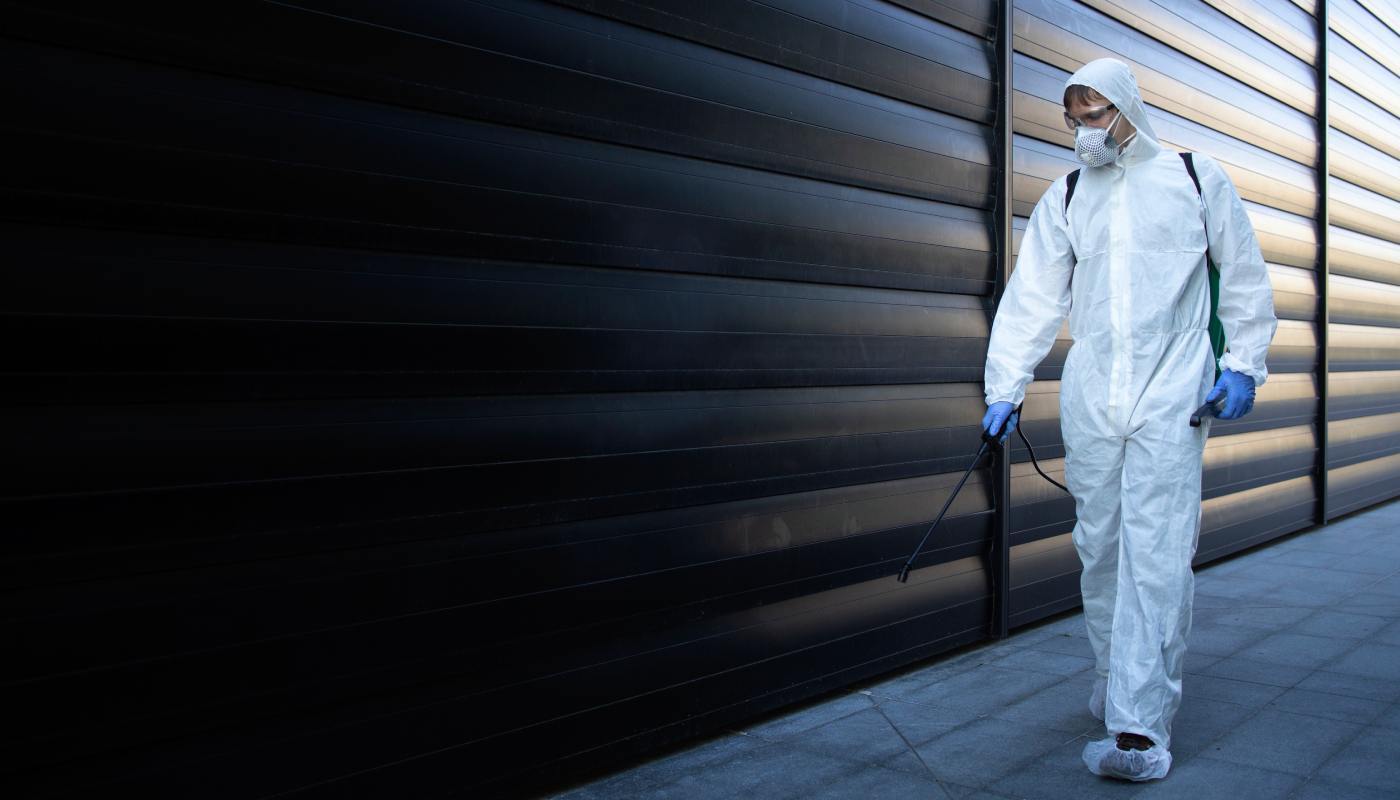
Bring up risk assessments with most pest control business owners and the response usually falls into one of two camps. Either there’s an old folder somewhere in the office that hasn’t been opened since 2022, quietly collecting dust, or there’s an admission that “we really need to sort those out properly at some point.”
It’s easy to see why risk assessments get a bad reputation. A lot of them end up as box-ticking paperwork that nobody actually reads once it’s filed away. And honestly, when they’re done badly, that’s exactly what they are. But when they’re done properly, they become one of the most important tools a pest control business has for protecting staff, customers, and the business itself.
Good risk assessments make health and safety practical and manageable. Ignore them, though, and you can leave your business exposed in ways that often only become obvious after something has already gone wrong.
This guide looks at the legal side of risk assessments, the recent changes businesses need to be aware of, and, more importantly, how to approach the process in a way that’s genuinely useful rather than just something that looks compliant on paper.
What the law says
Two pieces of legislation matter most here.
The Health and Safety at Work etc. Act 1974 places a duty of care on every employer to protect the health, safety, and welfare of their employees and anyone else affected by their work — customers, contractors, members of the public. It also places obligations on employees: they're legally required not to endanger themselves or others, and to follow their employer's instructions on safety. That second part matters more than most people realise. If a technician ignores the guidance you've given them and has an accident, the outcome of any investigation looks very different than if no guidance existed at all.
Sitting beneath the Act are the Management of Health and Safety at Work Regulations 1999, which is where risk assessments are specifically covered, under Regulation 3. This is what requires employers to identify and assess the risks their work creates and act on what they find. Regulation 10 of the same legislation requires you to share that information with your employees. Doing the assessment and filing it away solves half the legal problem. Sharing it solves the other half.
You also need a written health and safety policy: a statement of intent that says your company understands its obligations and sets out how it intends to meet them. For a pest control business, that's not a box-ticking exercise. It's the document an HSE inspector would ask to see if something went wrong.
What's changed recently
All of that legislation is still current. The Health and Safety at Work Act has been in force for over fifty years and remains the bedrock, but two developments are worth knowing about.
HSE enforcement is up. The HSE carried out over 13,200 workplace inspections in 2024/25, a 47% increase. The direction of travel is more enforcement, not less. The HSE's latest workplace injury and ill health statistics put work-related ill health at 1.7 million workers in 2023/24, with 138 workplace fatalities. When the HSE investigates and finds a problem, they publish their findings publicly, charge for the investigation, and can prosecute. For a small pest control business, that level of scrutiny is damaging regardless of whether it results in a fine.
Rodenticide regulations have tightened sharply. The Campaign for Responsible Rodenticide Use (CRRU UK) introduced major changes in 2025 and 2026. From January 2025, outdoor use restrictions came into force for second-generation anticoagulant rodenticides (SGARs). From January 2026, professional purchase of these products requires mandatory certification. If your COSHH assessments and method statements were written before these changes, they need updating to reflect the new restrictions. BPCA keeps members informed of these changes as they develop, which is one of the practical reasons membership matters for compliance.
The risks pest control businesses actually face
Risk assessments in pest control tend to mention slips, trips, and falls because they feel like a safe default. They often get less attention than they deserve until someone falls off a ladder on a roof inspection or slips on a wet surface carrying equipment. But the risk picture for pest control businesses is broader than that.
Chemical exposure. Technicians handle pesticides, rodenticides, and insecticides that carry real health risks — dermatitis, respiratory problems, and acute toxicity if procedures break down. COSHH Regulations require you to assess exposure to hazardous substances, put controls in place, and keep records of those controls. This runs alongside but separately from your general risk assessment.
One thing worth examining honestly: most pest control businesses have a preferred product for each pest type. The go-to insecticide. The reliable rodenticide. That preference doesn't always reflect which product carries the lowest risk. The first rule of COSHH is to substitute a hazardous chemical with something less harmful where you can. If you haven't reviewed your product choices through that lens recently, it's worth doing.
Manual handling. Carrying heavy equipment, lifting rodenticide bags and chemical containers, working in awkward postures in confined spaces: these cause real injuries over time. The move to 10kg rodenticide bags was partly a response to musculoskeletal injury data from the industry. Document the manual handling risks your technicians face regularly, not just the dramatic ones.
Working at height. Roof inspections, loft spaces, elevated proofing work. The Working at Height Regulations 2005 apply every time a technician goes up a ladder. Falls from height continue to cause serious workplace injuries.
Lone working. Most pest control technicians work alone most of the time. If something goes wrong on site — a chemical incident, a fall, a medical episode — there's no one there to call for help or raise an alarm. A lone working risk assessment needs to cover what happens in an emergency, how you know a technician is safe, and what your process is if they don't check in.
Driving. The sheer volume of driving pest control technicians do creates occupational road risk that often goes unassessed. Musculoskeletal problems from extended periods at the wheel, fatigue on long routes, vehicle incidents — all fall within what you should be considering.
Confined spaces. Crawl spaces, roof voids, drains. These can require specific confined space procedures, training, and in some cases a formal permit to work.
Acts of violence. Working in urban areas, entering properties in varied neighbourhoods, attending commercial premises out of hours — technicians do face situations where their personal safety is at risk. It's uncomfortable to put in a risk assessment but necessary.
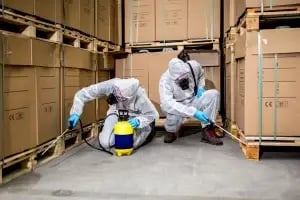
The five steps
The HSE's five-step risk assessment framework has been the standard across UK workplaces for years. It hasn't changed and it works.
Step 1: Identify the hazards. Walk through what your technicians actually do and look for anything that could cause harm. Talk to them, they'll spot things you won't. Check product data sheets and manufacturer guidance for chemicals. Look at near-miss reports if you keep them.
Step 2: Decide who might be harmed and how. Employees are the obvious group, but pest control work also involves risk to customers, their families, third parties on commercial sites, and potentially the public. A treatment in a food production facility creates a different risk profile to a domestic property visit.
Step 3: Evaluate the risks and decide on precautions. Once you know what the hazard is and who's at risk, work out what you're already doing to manage it and whether that's enough. The goal is to get the risk as low as reasonably practicable. Can you eliminate the hazard entirely? If not, can you reduce it? Controls sit in a hierarchy: eliminate, substitute, engineer, administer (training, procedures), protect (PPE). PPE should be the last resort, not the first.
A useful way to think about this step: start with a severity score and a probability score for each hazard. Multiply them together to get a risk rating. Medium risk means you need to act. The assessment is only successful when the actions you take reduce that rating.
Step 4: Record your findings and implement them. Write it down. More on the five-employee rule below, but regardless of legal obligation, document what you've found and what you've done about it. A risk assessment that exists only in someone's head is worthless when the HSE comes asking.
Step 5: Review your assessment and update if necessary. At minimum, once a year. Also whenever the work changes, when new equipment or products are introduced, after a near-miss or incident, or when conditions on a regular site change. A risk assessment that hasn't been touched since 2021 may as well not exist for the purposes it's supposed to serve.
COSHH assessments
COSHH assessments are a separate requirement from your general risk assessment but sit alongside it. Under the Control of Substances Hazardous to Health Regulations 2002, you must assess the risks from any hazardous substance your technicians use or are exposed to, and put controls in place.
For pest control, that means assessments for every pesticide, rodenticide, and chemical product in use. It means considering dermal exposure (skin contact), inhalation, and ingestion risks. It means documenting the controls: PPE requirements, ventilation, application methods, re-entry intervals, storage and disposal procedures.
Start with the product label, not just the safety data sheet. Safety data sheets give you the technical detail. Your COSHH assessment should reference both and document what your business does to control exposure in practice.
With the CRRU changes now in force, any COSHH assessment covering SGARs needs to reflect the updated outdoor use restrictions. If you're still working from assessments written before January 2025, update them.
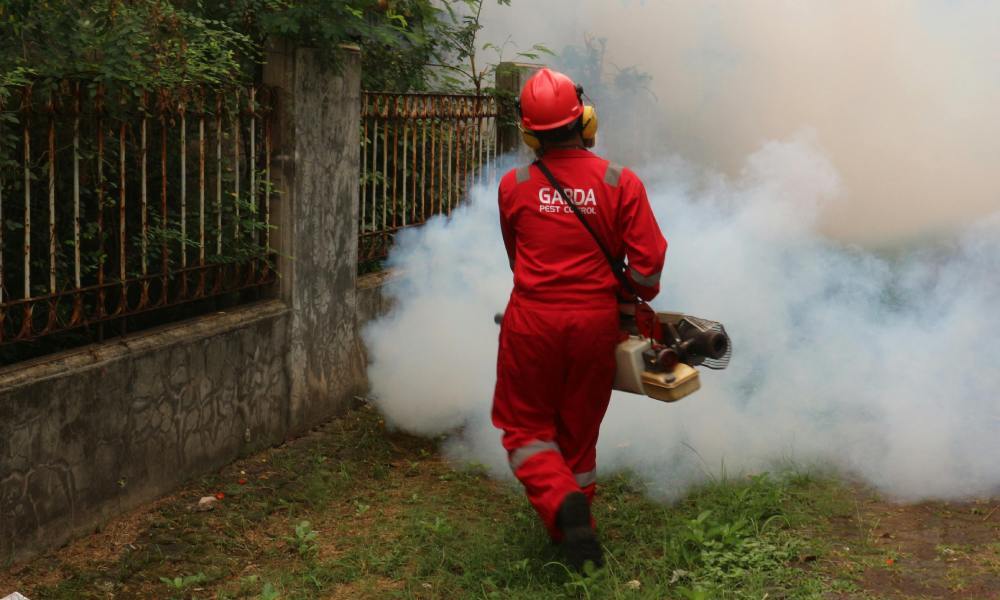
Generic vs site-specific risk assessments
Most pest control businesses need both.
A generic risk assessment covers common hazards across all similar work: lone working, driving, manual handling, chemical use. Once written and reviewed, it applies across the team as a baseline.
Site-specific risk assessments cover the particular hazards of a specific location: a food processing facility, a healthcare premises, a high-rise building, a confined drainage system. These are written when you start a new contract and reviewed at the start of each visit to check whether anything has changed.
On routine commercial contracts (say, twelve visits per year to the same premises), the practical approach is to complete the site-specific assessment when the contract starts and then, at each visit, check whether conditions have changed. Most pest control technicians find a simple note on the treatment report effective: "no new risks noted," dated and signed. That records that you made the assessment even when nothing changed.
The five-employee recording rule
Businesses with fewer than five employees don't legally have to write their risk assessments down. This confuses a lot of small pest control businesses into thinking that below five employees, risk assessments are optional.
They're not. The legal duty to assess the risk exists regardless of how many people you employ. What the rule removes is the written recording obligation. The assessment still has to happen.
More importantly: if something goes wrong and the HSE is investigating you, how do you prove you made an assessment? An unrecorded assessment is an unverifiable one. Write them down anyway. You're doing the thinking either way, so the few minutes it takes to put it on paper gives you something to point to if you ever need it.

Dynamic risk assessments
Not every risk can be assessed in advance. Pest control technicians work in varied environments where conditions change: scaffolding that wasn't there on the last visit, a broken step that the customer hasn't mentioned, a site where something looks wrong from the moment you arrive.
A dynamic risk assessment is the mental process of constantly evaluating what's in front of you and adjusting your approach. The police and emergency services operate on dynamic risk assessment constantly because they face unpredictable environments every day. Pest control technicians do too.
Knowing when a dynamic assessment is sufficient and when something needs to be written down is the skill to develop. If a technician encounters something new and potentially hazardous on site, that should be recorded: on the treatment report, as a note to the office, as an update to the site-specific risk assessment. The mental assessment alone isn't enough once a new hazard has been identified.
Sharing and reviewing: where most businesses fall short
Writing a risk assessment and filing it away is only half the job. The Management Regulations specifically require that information is shared with employees. A risk assessment your technicians have never seen offers them no protection, and you no legal defence.
How you share it is up to you: toolbox talks, team meetings, email, a folder in the van. What matters is that you can demonstrate the sharing happened. A toolbox talk with a sign-off sheet. A team meeting noted in minutes. A signed acknowledgement on the assessment itself. The format is less important than the evidence.
Annual review is the legal minimum. Review also triggers when anything changes: new products, new sites, new employees, equipment changes, incidents, or near misses. A near miss is a particular signal worth paying attention to. Something nearly went wrong. That's your chance to update the assessment before something does go wrong.
Building the culture that makes people report near misses is its own challenge. If reporting a near miss means paperwork, an awkward conversation, or the impression of being blamed, people won't report them. If it means sending a quick note and knowing the business will act on it, they will. Make it easy and make it normal.
Who should do your risk assessments
Risk assessments must be carried out by a "competent person." Competence here means the right combination of knowledge, training, and experience. Not necessarily a formal qualification. Someone who's worked in pest control for ten years but has no health and safety training is arguably more competent to assess the specific hazards of the trade than a qualified health and safety professional who's never handled a rodenticide.
Ideally someone has both: trade knowledge and health and safety training. BASIS PROMPT and BPCA-accredited training both build relevant competence. So does IOSH membership.
Be cautious about appointing someone who lacks the experience to recognise what they're looking at. A risk assessment written by someone who's never been on a pest control job is going to miss things that matter. If something goes wrong and the HSE finds that the person you appointed wasn't competent, that creates liability, not protection.
What good looks like in practice
A pest control business with its risk assessments genuinely in order has a clear shape:
Current generic assessments covering the core hazards: lone working, driving, manual handling, chemical exposure, working at height. A set of site-specific assessments for commercial contracts. COSHH assessments for every product in use, updated after the CRRU changes. An annual review calendar. Treatment reports with a section for recording site-specific risk observations on every visit. A clear process for technicians to flag new hazards. Team meetings or toolbox talks where risk assessments are discussed, not just distributed.
None of that is complicated. Most of it is just having a system and sticking to it.
Keeping records while on the move
Pest control technicians spend most of their day away from an office. Paper-based systems create gaps: forms left in vans, records that take days to make it back to the office, documentation that's hard to retrieve when a client or inspector asks for it.
Fieldmotion's mobile forms allow technicians to complete site visit records, note any changes to site conditions, and record risk observations directly from the job — on a phone or tablet, before they leave the premises. That record sits against the job in the system, accessible immediately, and timestamped to show when it was made.
For pest control businesses managing multiple commercial contracts, the job management platform connects treatment reports, visit schedules, and site records in one place. When an inspector asks for documentation on a specific site, it's a matter of searching rather than hunting through folders. Fieldmotion's planned maintenance module handles the scheduling side — recurring commercial contracts, annual review reminders, regular service visits — so the process of reviewing and updating risk assessments doesn't get lost in the pace of the work.


