
How PPM Turns Chaos into Predictable Revenue
-

-
-

01 Jun, 2026
-

13 min read
-
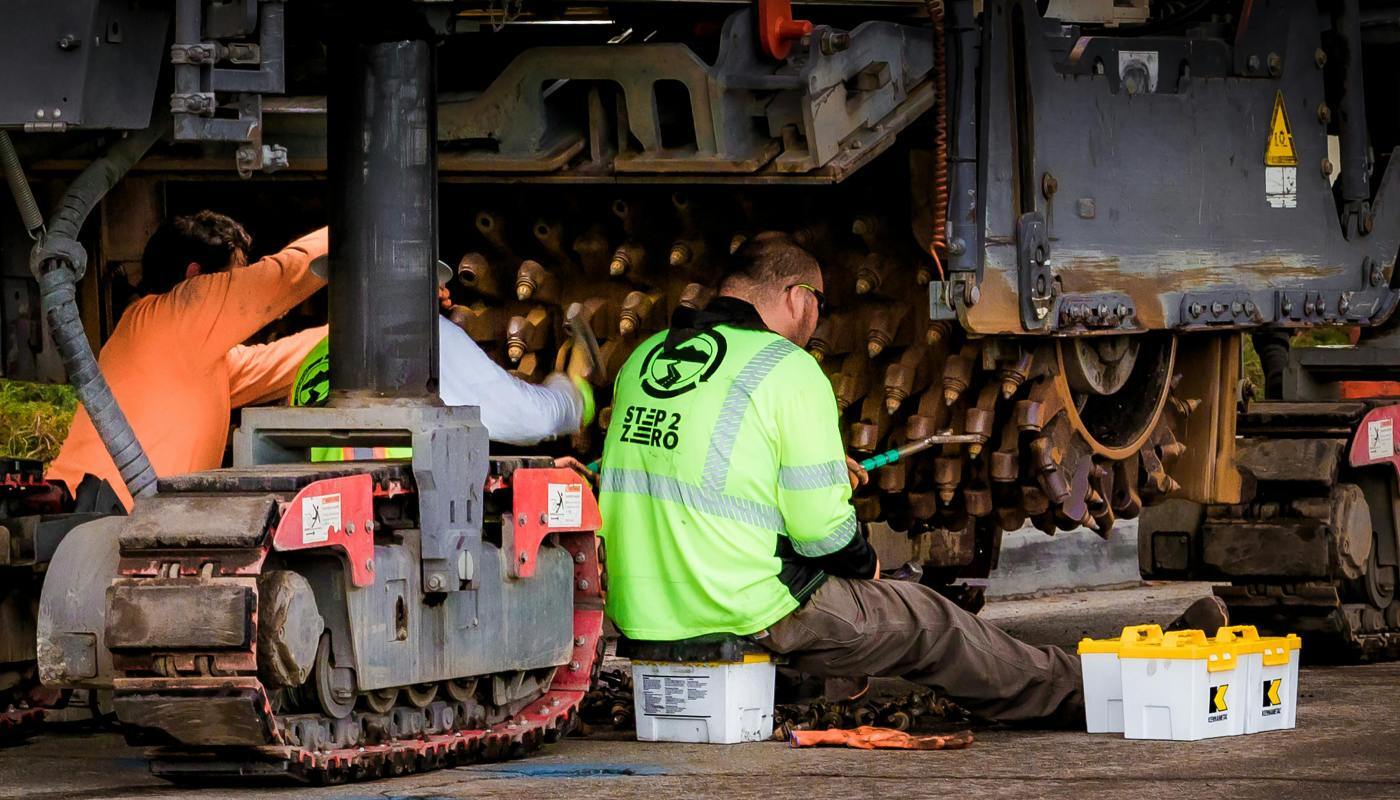
For a lot of field service businesses, the daily routine looks pretty much the same. A customer calls because something has gone wrong, an engineer gets dispatched, the issue gets fixed, and then it's straight on to the next job. Everyone stays busy, the calendar stays full, and it can feel like things are running well.
The problem is that constantly reacting to breakdowns is an expensive way to operate. The longer a business relies on emergency work, the harder it becomes to break out of that cycle.
Equipment never seems to fail at a convenient time either. It's usually during the busiest periods, over a bank holiday weekend, or when every engineer is already tied up elsewhere. Suddenly you're dealing with urgent callouts, stressed teams, frustrated customers, and a schedule that's being rewritten by the hour.
That's where planned preventative maintenance (PPM) comes in. It isn't flashy, and it's not a complicated concept. But when it's implemented properly, it can completely change how a field service business operates, improving efficiency, reducing costly disruptions, and creating a far more predictable way of working.
What is planned preventive maintenance?
Planned preventive maintenance (PPM) is a scheduled, proactive approach to maintaining equipment and assets. Instead of waiting for something to fail, you service it at set intervals to prevent failure in the first place.
Terminology varies. You will hear it called PPM, planned maintenance, preventive maintenance, scheduled maintenance, or preventative maintenance. They all refer to the same principle: maintenance carried out before things go wrong, rather than in response to them going wrong.
Reactive maintenance is the opposite: fixing things after they have failed. Reactive maintenance has its place. Not every job can be anticipated. But running a business primarily on reactive work is, as one field service consultant put it, a vicious circle: you are too busy dealing with breakdowns to prevent them, so you keep getting more breakdowns.
For the field service businesses most affected by this, the ratio tells the story: roughly 70% of work is reactive repairs, 30% is planned maintenance. Businesses that deliberately reverse that ratio report fewer breakdowns, more efficient engineers, and considerably happier customers.
PPM vs reactive maintenance
Most business owners underestimate how wide the cost difference between reactive and planned maintenance actually runs.
Emergency premium. Reactive callouts typically carry a premium rate. That premium is income when you are the one being called, but it is cost when you are managing assets for a commercial client on a contract. Emergency parts sourced at short notice come at premium pricing too.
Downtime cost. For commercial clients, an asset failure creates operational disruption. A heating system failure in a care home, a refrigeration breakdown in a food facility, a fire safety system offline in a commercial building. The cost of that downtime falls on the client, but it reflects on the contractor.
Asset life. Regular servicing extends the working life of equipment. Deferred maintenance accelerates wear and increases the likelihood of costly repairs or premature replacement. According to industry data cited by Comparesoft's facilities management research, businesses moving from reactive to structured maintenance programmes typically see material reductions in total maintenance costs alongside extended equipment service life.
Planning efficiency. Planned visits are scheduled in advance. Engineers know where they are going, what they need, and how long it should take. Reactive callouts are by definition unplanned: disruption to everything already in the diary, parts that may not be on the van, and jobs that take longer because nobody prepared for them.
Compliance exposure. For most statutory maintenance requirements, the obligation is on the building owner or occupier, not the contractor. But when something fails and it emerges that scheduled maintenance was missed, the question of accountability gets complicated quickly. Documented PPM provides evidence of due diligence.
The three types of PPM
Not all preventive maintenance works the same way. There are three distinct approaches, each suited to different circumstances.
Time-based maintenance
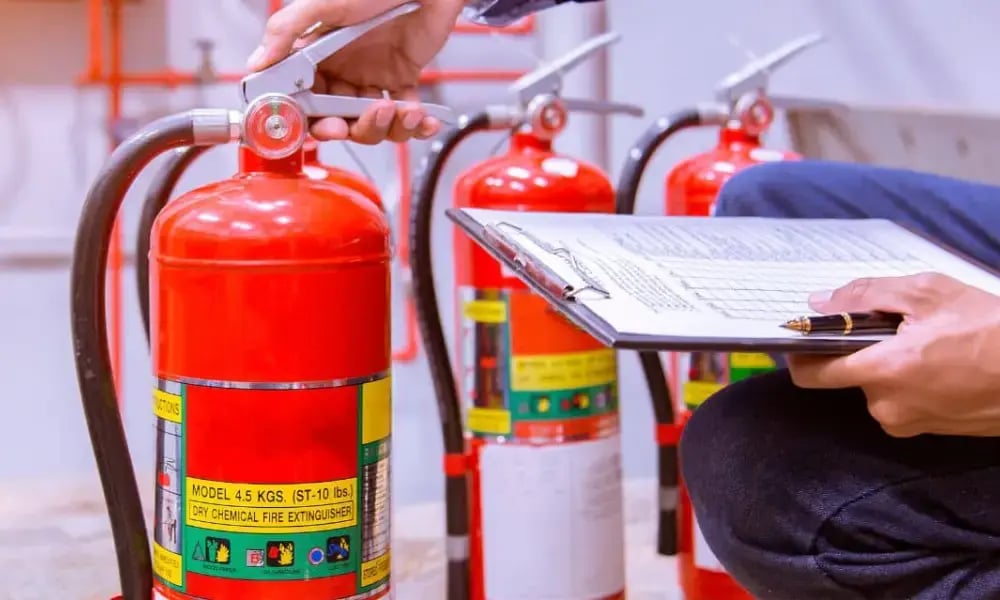
Work is scheduled at fixed intervals regardless of equipment condition: annually, quarterly, monthly, or at whatever frequency is specified by the manufacturer or regulation. A gas boiler service once a year. A fire alarm test every six months. An electrical installation condition report every five years.
Time-based maintenance is the most common approach in field service because it is predictable, contractable, and easy to schedule. The limitation is that it can result in servicing equipment that does not yet need it, or missing issues that develop between scheduled visits.
Usage-based maintenance
Service intervals are tied to equipment usage rather than the calendar. A generator serviced after every 500 running hours. A pump inspected after a certain number of cycles. This is more common in industrial and manufacturing contexts than in typical field service, but for equipment with telemetry or hour meters it is the more accurate approach.
Condition-based maintenance
Maintenance is triggered by monitored data: temperature readings, vibration levels, pressure, current draw. If something is trending outside normal parameters, it triggers a service visit before failure occurs. This requires sensor data and the ability to monitor it. For field service businesses managing assets for commercial clients, condition-based monitoring is becoming more accessible, but most smaller operations still work primarily on time-based schedules.
In practice, most field service businesses run a combination: time-based for statutory and contractual obligations, usage-based where equipment has reliable hour meters, and increasingly some condition-based elements as monitoring technology becomes more affordable.
What PPM covers across the main trades
The main trades all have PPM requirements, though specific tasks and frequencies vary.
HVAC and refrigeration
Filter cleaning and replacement, coil cleaning, refrigerant checks, belt inspections, lubrication of moving parts, controls testing, thermostat calibration. Most HVAC equipment manufacturers specify annual service as a minimum. Commercial systems with high run hours may require quarterly or semi-annual visits.
Gas and heating
Annual boiler service is a legal requirement under Gas Safety (Installation and Use) Regulations 1998 for landlords, and strongly recommended for commercial premises. PPM contracts for commercial heating systems typically include an annual service, interim system checks, and emergency callout cover.
Electrical
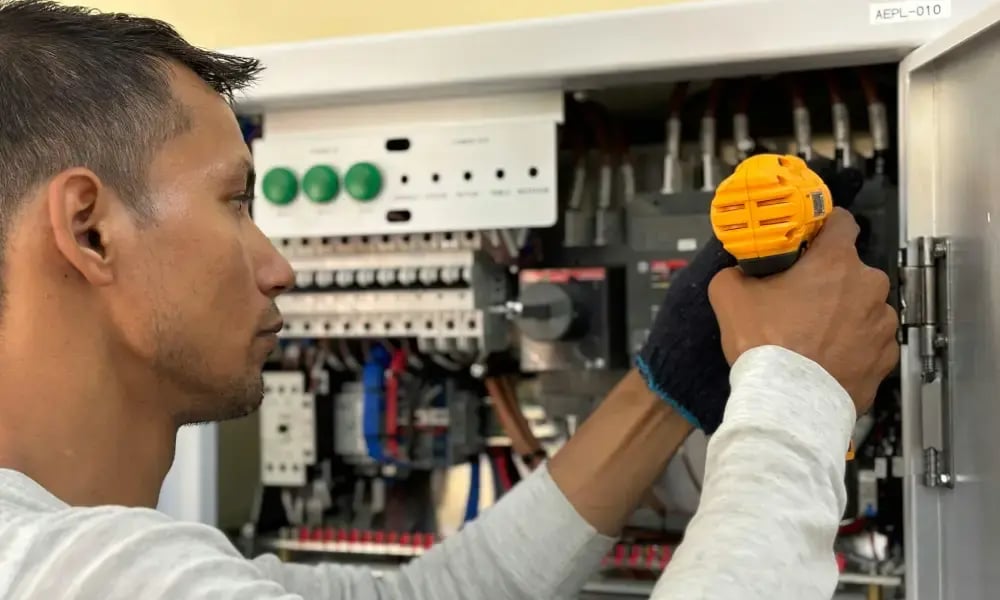
Fixed wiring inspection and testing (EICR) on a five-year cycle for most commercial premises, more frequently for industrial or high-risk environments. Portable appliance testing (PAT), emergency lighting testing (monthly visual check, six-monthly function test, annual full duration test), and fire alarm testing are common PPM items for electrical contractors working in the commercial sector.
Fire and security
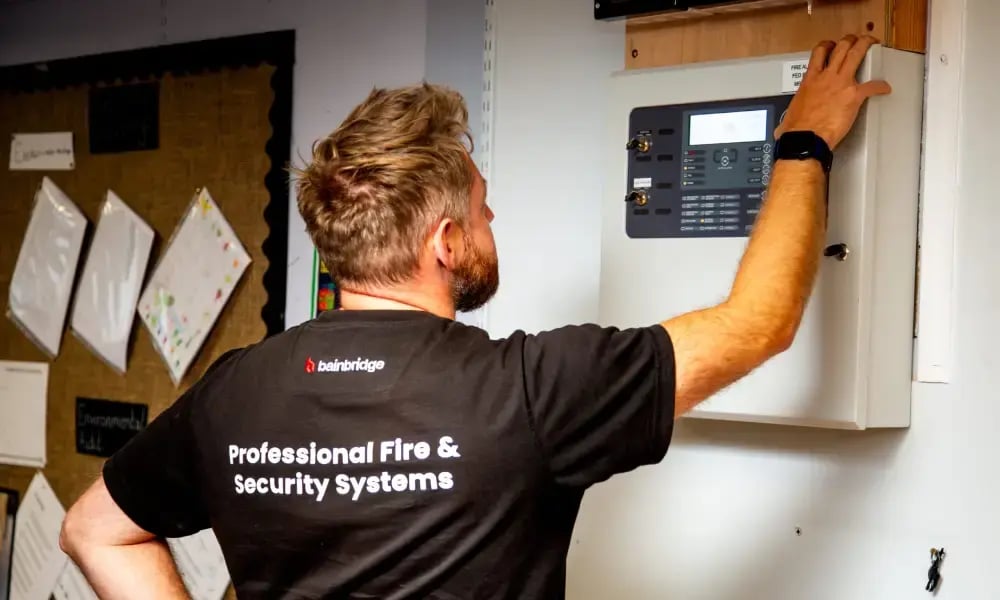
Fire alarm systems require weekly tests, six-monthly engineer inspections, and annual full system checks under BS 5839. Emergency lighting, sprinkler systems, and dry risers all carry their own maintenance intervals defined by British Standards and the Regulatory Reform (Fire Safety) Order 2005. For fire and security contractors, PPM contracts are often the core of the business model.
Facilities maintenance
Commercial estate maintenance covers heating, cooling, ventilation, electrical systems, fire safety, water hygiene (including legionella risk management), lifts, access control, and building fabric. Larger estates with multiple assets benefit from a CAFM system to manage the full picture — the CAFM explainer covers how that works in practice.
How to set up a PPM schedule
For a field service business building PPM contracts from scratch, the process follows a consistent structure.
Step 1: Build an asset register
Before you can maintain anything on a schedule, you need to know what assets exist. For each asset, record the make, model, serial number, installation date, location, and any warranty or manufacturer service requirements. This is the foundation of the whole programme. Without it, you are scheduling maintenance for assets you cannot reliably identify.
Step 2: Establish service intervals
Work through each asset type and determine the appropriate maintenance frequency. The starting point is always the manufacturer's recommendation. Layer onto that any statutory requirements (Gas Safe, NICEIC, fire safety regulations), client contractual requirements, and your own experience of how particular equipment performs in the environments you work in.
Step 3: Define what each visit includes
A PPM visit means more than "go and have a look." Each service type should have a defined checklist: what is inspected, what is cleaned, what is tested, what is replaced as routine, what readings are taken. This standardises what engineers do on each visit, makes it easier to train new staff, and creates a reliable record for compliance purposes.
Step 4: Build the schedule
Map all visits across the year. Forward planning earns its value here more than anywhere else. You can see months ahead when multiple PPM visits cluster at the same sites, when seasonal demand peaks, and where there is capacity to absorb additional work. A business running primarily on reactive work never has this visibility. You cannot plan what you cannot see.
Step 5: Document every visit
Every PPM visit should generate a service record: what was done, what was found, what was replaced, any defects noted, and the engineer's signature. This is the audit trail that protects both parties if questions arise later. For compliance-critical assets, that documentation needs to be retrievable quickly.
PPM as recurring revenue
PPM is more than an operational approach for field service businesses. It is a revenue model.
A reactive business has lumpy, unpredictable income. Good weeks when the phone is busy. Slow weeks when nothing comes in. Cash flow is hard to forecast. Quiet periods put pressure on margins.
Run PPM contracts and a portion of revenue is locked in at the start of the year. The visits are in the diary before January. Engineers have a base schedule to work around. The slow weeks are not empty.
The service agreements guide covers the structure of maintenance contracts in detail, but the commercial logic holds: a customer paying for annual PPM cover is worth more in total revenue and is cheaper to serve than the same customer calling reactively. You are not paying to acquire that visit. The job is already on the schedule.
There is a secondary commercial benefit too. An engineer on a scheduled visit who notices something developing has the credibility to recommend a repair before it becomes an emergency. That recommendation converts more readily than one that arrives out of nowhere. The customer trusts the engineer. The engineer has the history of the asset. It is a different conversation to a cold callout.
Pricing PPM contracts
Pricing a PPM contract correctly requires knowing your actual costs per visit: labour, travel, parts consumed as routine, and a margin that reflects the lower acquisition cost of contracted revenue relative to ad-hoc work. A discount relative to reactive rates is commercially reasonable. A discount that erodes your margin because you have not tracked what the contract actually costs is not.
This is a point where many businesses encounter a problem they cannot easily see: they do not know whether a PPM contract is profitable because they have not tracked the costs against it. The question "what should I charge when this contract comes up for renewal?" cannot be answered without that data. The job costing guide covers how to connect visit costs to individual contracts.
Common mistakes and the vicious circle that creates them
Between how PPM should work and how it works in most businesses, there is a gap. It has a consistent cause.
Most businesses fall into the same pattern: a business has a list of PPM visits due, in a spreadsheet or a system they do not fully use. Reactive work fills the diary. A PPM visit gets pushed back. Then pushed back again. Eventually it gets skipped. Nobody noticed at the time. Six months later, when the asset fails, the question arises of when it was last serviced.
This is not a failure of commitment. As one field service consultant observed, businesses in this position are not there through lack of desire or professionalism. They are overwhelmed. They cannot see clearly what is coming because the data is not organised in a way that makes it visible. The day-to-day pressure crowds out the forward planning, and the backlog quietly grows.
It works like this: deferred PPM leads to more equipment failures, which generate more reactive callouts, which fill the diary, which is why the PPM was deferred in the first place. Without a deliberate intervention, nothing changes.
Specific mistakes worth naming:
Skipping visits without tracking what is lost. Every skipped PPM visit has a value. If a contract pays per visit, that visit is revenue not collected. Even on annual-contract billing, the cost of the visit still sits in your cost base whether or not you do it. Skipped visits that are not recorded mean inaccurate contract profitability and compliance gaps that could become costly later.
Not accounting for parts. PPM visits have a predictable parts consumption: filters, belts, lubricants, O-rings. If these are not planned and ordered ahead of the visit, engineers arrive without what they need, visit durations extend, and first-time completion rates drop.
Treating all maintenance as reactive until it isn't. Some statutory requirements only become visible when enforcement or an incident prompts a review. A contractor who cannot demonstrate a documented maintenance history is in a difficult position. The Health and Safety Executive is clear that planned, documented maintenance is part of the duty of care for anyone responsible for equipment or premises.
Renewing contracts without reviewing profitability. A contract that looked reasonable at the start may have become unprofitable as the asset aged, the visit frequency increased, or parts costs rose. Renewing at the same price without reviewing the underlying costs is a common source of margin erosion.
What changes when PPM is running properly
Businesses that make the shift from predominantly reactive to predominantly planned work describe the same effects.
Engineer schedules become predictable. The team knows weeks and months ahead what is in the diary rather than finding out the morning of. That predictability makes it easier to route efficiently, prepare the right parts, and absorb reactive work without the disruption it would otherwise cause.
Customer relationships change character. A contractor who shows up on a schedule, documents every visit, and can tell a client how their assets have performed over the last year is a different proposition from one that appears when something breaks. Customers who receive that level of service do not routinely shop around at contract renewal.
Commercial clients increasingly expect documented evidence of maintenance performance. The question "when was this last serviced and what was found?" now comes regularly: from auditors, yes, but also from clients who have been burned by contractors who could not answer it. PPM documentation is the answer.
Cash flow becomes more predictable. Revenue that is contracted and scheduled in advance is easier to forecast than a diary that depends on the phone ringing. For businesses managing seasonal cash flow pressures, the base of contracted PPM income provides the buffer that makes quiet periods manageable.
Managing PPM in Fieldmotion
Running PPM contracts at any volume requires a system that does the tracking for you. A spreadsheet works for a handful of assets. It does not scale.
Fieldmotion's planned maintenance module connects service contracts to asset records and forward scheduling, so the business can see what is coming, assign visits in advance, with nothing missed. Engineers receive jobs on their mobile device with the asset history and checklist already attached. Every completed visit generates a service record automatically, without separate paperwork.
Because planned maintenance sits within the same platform as job management, quoting, and invoicing, the cost of each visit feeds directly into contract profitability tracking. When a contract comes up for renewal, the data to price it correctly is already there.
For businesses carrying a backlog of reactive work and trying to shift toward a more planned model, having the schedule visible and the visits automatically generated removes the main reason PPM gets deferred: it takes someone actively managing a system to keep it on track, and that person is always busy dealing with something more urgent.
The job management platform and mobile forms provide the operational layer: engineers completing visits on site, capturing readings, noting defects, collecting signatures, and returning records to the office in real time rather than days later.
Related reading
-
CAFM explained: what it is, what it does, and whether you need one — for businesses managing larger estates with multiple asset types
-
Service agreements in field service — how to structure and price maintenance contracts
-
Job costing software — tracking actual costs against PPM contracts
-
How to price a field service job — building a price that reflects true costs
-
Seasonal cash flow in field service — how PPM contracts smooth out revenue through the year


